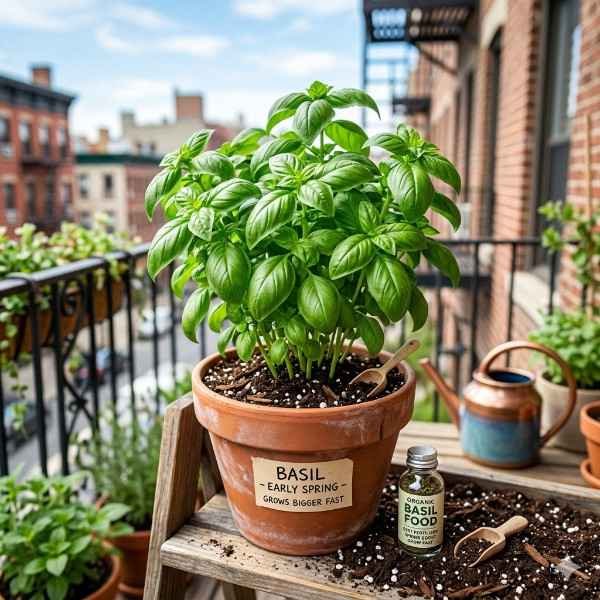
Growing basil on a balcony is one of the easiest and most rewarding ways to enjoy fresh herbs at home. However, early spring is a critical stage for basil growth. The right fertilizer can help your plants grow faster, develop stronger roots, and produce lush green leaves perfect for cooking.
In this guide, you’ll learn the best fertilizers for basil in early spring, how to apply them properly, and tips to grow bigger and healthier basil plants on your balcony.
Why Basil Needs Fertilizer in Early Spring
Early spring is when basil begins its active growth phase. After winter dormancy, plants require extra nutrients to build new stems and leaves.
Without proper nutrients, basil plants may experience:
- Slow growth
- Small leaves
- Yellowing foliage
- Weak stems
Using the right fertilizer during this stage helps the plant recover quickly from winter stress and grow vigorously.
Nutrients Basil Needs for Fast Growth
Basil thrives when it receives a balanced mix of three essential nutrients:
1. Nitrogen (N)
Nitrogen promotes leaf growth, which is especially important for basil because it is harvested for its leaves.
2. Phosphorus (P)
Phosphorus supports strong root development, helping basil absorb water and nutrients efficiently.
3. Potassium (K)
Potassium improves overall plant health, disease resistance, and flavor in basil leaves.
For balcony basil plants, fertilizers with ratios like 10-10-10, 5-5-5, or 12-6-6 work very well.
Best Fertilizers for Basil in Early Spring
1. Compost (Best Natural Fertilizer)
Compost is one of the best organic fertilizers for balcony basil plants. It improves soil structure while slowly releasing nutrients.
Benefits:
- Provides balanced nutrients
- Improves moisture retention
- Encourages beneficial microbes
How to Use:
- Mix 20–30% compost into your potting soil before planting basil.
- Add a thin layer on top of the soil every 3–4 weeks.
2. Fish Emulsion (Fast Growth Booster)
Fish emulsion is a liquid organic fertilizer rich in nitrogen.
Benefits:
- Encourages rapid leaf growth
- Ideal for early spring feeding
- Works quickly in containers
How to Use:
- Dilute according to label instructions.
- Apply every 2 weeks while basil is actively growing.
3. Worm Castings (Gentle Organic Feeding)
Worm castings are a mild organic fertilizer perfect for herbs.
Benefits:
- Improves soil fertility
- Prevents nutrient burn
- Enhances plant immunity
How to Use:
- Mix 1–2 tablespoons into the top layer of soil every 2–3 weeks.
4. Balanced Liquid Fertilizer (Quick Nutrient Supply)
A balanced liquid fertilizer like 10-10-10 or 20-20-20 works well for balcony containers.
Benefits:
- Fast nutrient absorption
- Easy to apply in small pots
- Supports overall plant growth
How to Use:
- Dilute to half strength.
- Feed basil every 10–14 days.
5. Organic Herb Fertilizer
Special herb fertilizers are designed for leafy plants like basil.
Benefits:
- Perfect nutrient balance for herbs
- Encourages strong leaf production
- Safe for edible plants
These fertilizers are ideal if you want consistent results without mixing nutrients manually.
How to Fertilize Basil on a Balcony (Step-by-Step)
- Start with nutrient-rich potting soil when planting basil.
- Apply a light fertilizer dose in early spring once plants begin growing.
- Use liquid fertilizer every 2 weeks for container basil.
- Avoid over-fertilizing because it can reduce basil flavor.
- Water plants after fertilizing to help nutrients reach the roots.
Signs Your Basil Needs Fertilizer
Watch for these signs that your basil plant needs nutrients:
- Pale or yellow leaves
- Slow or stunted growth
- Thin stems
- Smaller leaves than usual
Feeding the plant early prevents these problems and keeps basil productive.
Common Fertilizing Mistakes to Avoid
Over-Fertilizing
Too much fertilizer can cause rapid growth but poor flavor in basil leaves.
Using High-Phosphorus Fertilizers
Basil doesn’t need large amounts of phosphorus because it’s grown for leaves, not flowers.
Fertilizing Dry Soil
Always water slightly before applying fertilizer to prevent root burn.
Extra Tips for Growing Bigger Basil Plants on a Balcony
Use the Right Pot Size
Choose a container at least 8–10 inches deep for healthy root growth.
Provide Plenty of Sunlight
Basil needs 6–8 hours of sunlight daily.
Pinch the Tops Regularly
Pinching the top leaves encourages bushy growth and more harvests.
Maintain Good Drainage
Use pots with drainage holes to prevent root rot.
Final Thoughts
Choosing the best fertilizer for basil in early spring on a balcony can make a huge difference in plant size, leaf quality, and overall productivity. Organic options like compost, fish emulsion, and worm castings provide gentle nutrition, while balanced liquid fertilizers offer a quick growth boost.
With the right fertilization schedule and proper balcony care, you can grow bigger, healthier basil plants and enjoy fresh leaves throughout the growing season.

Umair Abdullah is a dedicated balcony gardening writer who helps urban growers cultivate vegetables, herbs, and plants in small spaces. He focuses on practical, beginner-friendly methods and shares tested tips to make balcony gardening simple, productive, and enjoyable.