Growing cucumbers on a balcony is a practical way to produce fresh vegetables in a small space. However, many beginners face a frustrating issue: healthy plants produce flowers, but no cucumbers develop. The most common reason is poor pollination.
In open gardens, insects such as bees naturally transfer pollen between flowers. On balconies—especially in urban environments—these pollinators are often limited. As a result, hand pollination becomes a reliable solution to ensure fruit production.
This detailed, SEO-friendly guide explains how to hand pollinate cucumbers on a balcony, even if you are a complete beginner.
Why Hand Pollination is Important for Balcony Cucumbers
Cucumber plants rely on pollination to produce fruit. Without it, flowers will dry up and fall off without forming cucumbers.
Hand pollination helps you:
- Increase fruit yield significantly
- Improve the shape and quality of cucumbers
- Prevent flower drop and wasted growth
- Take full control of the growing process
For balcony gardeners, this simple technique can make the difference between success and failure.
Understanding Cucumber Flowers
To hand pollinate effectively, you must first understand the two types of cucumber flowers.
Male Flowers
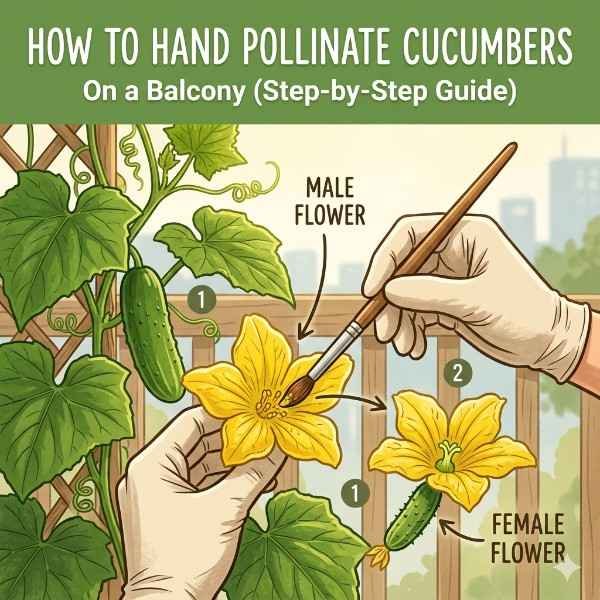
Male flowers produce pollen but do not develop into fruit. They grow on thin stems and usually appear earlier than female flowers.
Female Flowers
Female flowers are the ones that produce cucumbers. They can be identified by the small, immature cucumber located directly behind the flower. This part will grow into a full fruit if pollination occurs successfully.
Correct identification is essential, as only female flowers need to receive pollen.
Tools Required for Hand Pollination
Hand pollination does not require special equipment. You can use common household items such as:
- A soft paintbrush
- A cotton swab
- Your fingertip
These tools help transfer pollen gently without damaging the flowers.
Best Time to Pollinate Cucumbers
Timing plays a critical role in successful pollination. The ideal time is early in the morning, typically between 6 AM and 10 AM.
During this period:
- Flowers are fully open
- Pollen is fresh and viable
- Environmental conditions are more favorable
Avoid pollinating later in the day, as flowers may begin to close and pollen quality decreases.
Step-by-Step Guide to Hand Pollinate Cucumbers
Step 1: Inspect the Plant
Examine your cucumber plant in the morning and locate both male and female flowers that are fully open.
Step 2: Collect Pollen from a Male Flower
Take your brush or cotton swab and gently rub it inside a male flower. You should notice a fine yellow powder sticking to the tool, which is the pollen.
Alternatively, you can remove a male flower from the plant and expose its pollen-covered center.
Step 3: Transfer Pollen to a Female Flower
Carefully apply the collected pollen to the center of a female flower. This part is known as the stigma and is responsible for receiving pollen.
Ensure that the pollen makes proper contact for effective fertilization.
Step 4: Repeat the Process
For better results, pollinate multiple female flowers. You can also use pollen from different male flowers to increase the chances of successful fertilization.
Step 5: Observe the Results
After pollination, monitor the female flowers over the next few days. If successful, the small cucumber behind the flower will begin to grow. If it shrinks or turns yellow, pollination may not have been effective.
Tips to Increase Cucumber Yield on a Balcony
To maximize your harvest, follow these best practices:
- Pollinate daily during the flowering stage
- Provide at least 5 to 6 hours of direct sunlight
- Water consistently but avoid overwatering
- Use a balanced fertilizer with adequate potassium
- Ensure proper air circulation around plants
These steps support overall plant health and improve fruit production.
Common Mistakes to Avoid
Many beginners struggle due to simple errors. Avoid the following:
- Pollinating flowers that are not fully open
- Confusing male and female flowers
- Ignoring daily pollination during peak flowering
- Overwatering, which can damage roots and reduce flowering
Correcting these mistakes can quickly improve results.
Do All Cucumbers Require Pollination?
Not all cucumber varieties depend on pollination. Some modern hybrids are:
- Self-pollinating
- Parthenocarpic (capable of producing fruit without pollination)
However, many traditional cucumber plants still require pollination, especially those grown from standard seeds. If you are unsure, hand pollination is a safe and effective method.
How Long Does It Take for Cucumbers to Grow After Pollination?
Once pollination is successful:
- Fruit development begins within 2 to 3 days
- Cucumbers are usually ready for harvest within 1 to 2 weeks
Growth speed depends on the variety, temperature, and care provided.
Conclusion
Hand pollinating cucumbers on a balcony is a simple yet powerful technique that ensures consistent fruit production. In environments where natural pollinators are limited, this method allows you to take control of the process and significantly improve your harvest.
By understanding flower types, using basic tools, and following a consistent routine, even beginners can achieve excellent results. With proper care and regular pollination, your balcony can become a productive space for growing fresh, high-quality cucumbers.

Umair Abdullah is a dedicated balcony gardening writer who helps urban growers cultivate vegetables, herbs, and plants in small spaces. He focuses on practical, beginner-friendly methods and shares tested tips to make balcony gardening simple, productive, and enjoyable.