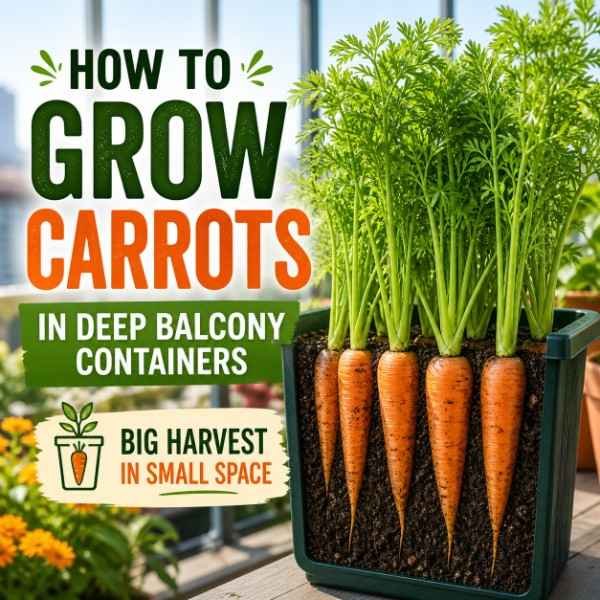
Growing carrots on a balcony might sound challenging, but with the right setup, you can harvest sweet, crunchy carrots even in a small space. The key is using deep containers, proper soil, and consistent care. This guide will walk you step-by-step so you can maximize yield, even if you’re a beginner.
Why Grow Carrots in Deep Containers?
Carrots are root vegetables, which means their growth happens underground. Shallow pots restrict root development, leading to short, twisted carrots. Deep containers solve this problem by allowing roots to grow straight and long.
Benefits of deep container growing:
- Better root development (long, straight carrots)
- Higher yield per plant
- Less risk of deformities
- Easier soil control (perfect texture and nutrients)
Choosing the Right Container
Depth is everything when growing carrots.
Ideal Container Specs:
- Depth: Minimum 10–12 inches (25–30 cm)
- Width: At least 8–12 inches
- Drainage: Must have drainage holes
Best Container Types:
- Grow bags (excellent aeration)
- Plastic or ceramic pots
- Wooden planter boxes
Pro Tip: For longer carrot varieties, go for 12–15 inches deep containers.
Best Carrot Varieties for Balcony Growing
Not all carrots grow well in containers. Choose compact or adaptable varieties.
Recommended Varieties:
- Nantes – Sweet, medium-length (perfect for beginners)
- Chantenay – Short and thick (great for smaller spaces)
- Danvers – Good for deeper containers
- Parisian (Round carrots) – Ideal for shallow pots
Soil Preparation (Most Important Step)
Carrots need loose, well-draining soil. Hard or rocky soil leads to forked roots.
Perfect Soil Mix:
- 50% garden soil or coco peat
- 30% compost (well-rotted)
- 20% sand or perlite
Key Requirements:
- Soft and fluffy texture
- No stones or clumps
- Slightly acidic to neutral pH (6.0–7.0)
Avoid: Heavy clay soil or fresh manure.
How to Plant Carrots in Containers
Step-by-Step Guide:
- Fill the container with prepared soil
- Sprinkle seeds evenly on the surface
- Cover lightly with 0.5 cm (thin layer) of soil
- Water gently using a spray
- Keep soil moist until germination (7–14 days)
Spacing:
- Thin seedlings to 2–3 inches apart after sprouting
Pro Tip: Don’t transplant carrots—they grow best when directly sown.
Sunlight Requirements
Carrots need at least 5–7 hours of sunlight daily.
Balcony Tips:
- South-facing balcony = ideal
- East-facing = good
- North-facing = use grow lights
If sunlight is limited, place pots where they get maximum exposure during the day.
Watering Schedule
Consistency is key for sweet, crack-free carrots.
Watering Tips:
- Keep soil evenly moist (not soggy)
- Water lightly every day in hot weather
- Reduce watering slightly as harvest approaches
Avoid:
- Overwatering → root rot
- Underwatering → bitter and tough carrots
Fertilizing for Maximum Yield
Carrots don’t need heavy feeding, but nutrients help improve size and taste.
Fertilizer Plan:
- Before planting: mix compost into soil
- After 3–4 weeks: apply liquid organic fertilizer
- Use low-nitrogen fertilizer (too much nitrogen = leafy growth, small roots)
Thinning & Maintenance
Thinning is essential for proper growth.
Why Thin?
Overcrowded carrots compete for nutrients, resulting in small roots.
How to Thin:
- Remove weaker seedlings
- Keep 2–3 inch spacing
Also:
- Remove weeds regularly
- Loosen topsoil gently if compacted
Common Problems & Solutions
1. Forked or Deformed Carrots
- Cause: Hard soil or obstacles
- Fix: Use loose, stone-free soil
2. Small Carrots
- Cause: Overcrowding or lack of nutrients
- Fix: Proper thinning + feeding
3. Cracked Roots
- Cause: Irregular watering
- Fix: Maintain consistent moisture
4. Slow Growth
- Cause: Low sunlight
- Fix: Move to brighter spot or use grow lights
Harvesting Carrots
Carrots are usually ready in 60–80 days, depending on the variety.
How to Know They’re Ready:
- Top of carrot visible above soil
- Bright color and firm texture
Harvest Tips:
- Loosen soil before pulling
- Pull gently from the base of leaves
Pro Tip: Harvest gradually—this gives remaining carrots more space to grow.
Yield Expectations (Small Space, Big Harvest)
With proper care, a single deep container can produce:
- 15–25 medium carrots (depending on size and spacing)
Using multiple containers on your balcony can give you a continuous supply.
Bonus Tips for Bigger Harvest
- Use deep containers (this is non-negotiable)
- Sow seeds every 2–3 weeks for continuous harvest
- Rotate containers for even sunlight exposure
- Use mulch to retain moisture
Conclusion
Growing carrots in deep balcony containers is one of the easiest and most rewarding ways to grow your own food in a small space. By focusing on depth, soil quality, and consistent care, you can achieve a surprisingly large harvest right from your balcony.
Even if you’re starting with limited space, a few well-managed containers can provide fresh, sweet carrots all season long.

Umair Abdullah is a dedicated balcony gardening writer who helps urban growers cultivate vegetables, herbs, and plants in small spaces. He focuses on practical, beginner-friendly methods and shares tested tips to make balcony gardening simple, productive, and enjoyable.