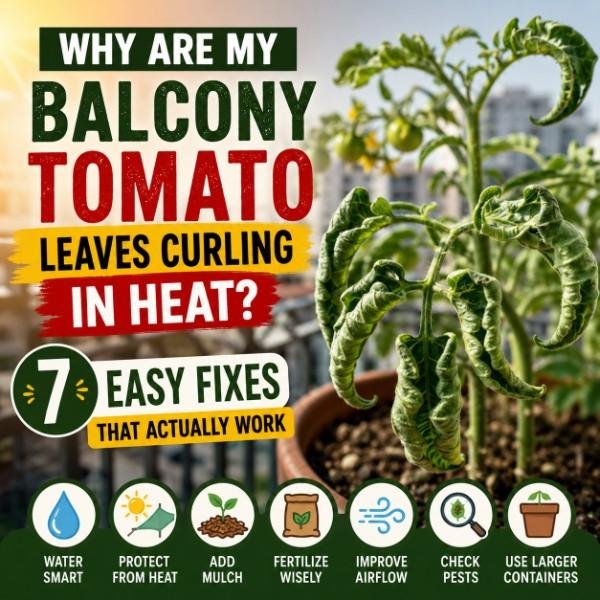
Tomatoes thrive in warm weather, but extreme heat can quickly turn a healthy balcony tomato plant into a stressed one. One of the most common signs of trouble is curling leaves. If you’ve noticed your balcony tomato leaves rolling upward or inward during hot days, don’t panic. In many cases, the problem is easy to fix.
This guide explains why tomato leaves curl in heat and the simple steps you can take to help your plants recover.
Why Do Balcony Tomato Leaves Curl in Hot Weather?
Leaf curling is often a natural defense mechanism. During intense heat, tomato plants try to reduce moisture loss by curling their leaves. While this can be alarming, it doesn’t always mean your plant is dying.
However, persistent leaf curl can also indicate watering issues, nutrient imbalances, or environmental stress.
Here are seven easy fixes that actually work.
1. Water Deeply and Consistently
Inconsistent watering is one of the biggest reasons tomato leaves curl.
Balcony containers dry out much faster than garden soil, especially during heat waves. If the soil becomes too dry and then suddenly receives a large amount of water, the plant experiences stress.
What to do:
- Water early in the morning.
- Keep the soil evenly moist.
- Check the top 1–2 inches of soil before watering.
- Avoid letting containers dry out completely.
2. Protect Plants From Extreme Afternoon Sun
Tomatoes love sunlight, but prolonged exposure to scorching afternoon heat can overwhelm them.
What to do:
- Move portable containers to a slightly shaded area during peak heat.
- Use a shade cloth that blocks 30–40% of sunlight.
- Position taller plants nearby to provide partial protection.
This simple adjustment can significantly reduce heat stress.
3. Add Mulch to Retain Moisture
Mulch isn’t just for garden beds. Balcony tomato containers benefit from it too.
A thin layer of mulch helps:
- Reduce evaporation.
- Keep roots cooler.
- Maintain consistent soil moisture.
Good mulch options:
- Straw
- Coconut coir
- Shredded leaves
- Compost
Apply a 1–2 inch layer around the base of the plant.
4. Avoid Over-Fertilizing
Too much fertilizer, especially nitrogen-rich products, encourages excessive leaf growth and may contribute to leaf curling.
What to do:
- Follow fertilizer instructions carefully.
- Use a balanced tomato fertilizer.
- Avoid frequent feeding during periods of extreme heat.
Sometimes less is more.
5. Improve Air Circulation
Crowded balcony gardens can trap heat and humidity around plants.
Poor airflow increases plant stress and may worsen curling symptoms.
What to do:
- Space containers properly.
- Remove unnecessary clutter around plants.
- Prune only lightly to improve ventilation.
Better airflow helps plants stay cooler and healthier.
6. Check for Pests
Although heat is often responsible, pests can sometimes cause curled tomato leaves.
Common culprits include:
- Aphids
- Whiteflies
- Broad mites
What to do:
- Inspect the undersides of leaves regularly.
- Wash pests off with a strong stream of water.
- Use insecticidal soap if infestations persist.
Early detection prevents bigger problems later.
7. Choose Larger Containers
Small pots heat up quickly and dry out faster, putting roots under constant stress.
What to do:
- Use containers that hold at least 5 gallons of soil.
- Ensure pots have adequate drainage holes.
- Consider light-colored containers that absorb less heat.
Healthy roots lead to healthier leaves.
When Should You Worry?
Heat-related leaf curl is usually temporary. If your tomato plants continue producing flowers and fruit, they will often recover once temperatures moderate.
However, if you notice additional symptoms such as:
- Yellowing leaves,
- Severe wilting,
- Stunted growth,
- Brown spots, or
- Distorted new growth,
you may be dealing with disease or a more serious issue that requires further investigation.
Final Thoughts
Seeing your balcony tomato leaves curling in heat can be frustrating, but it’s often your plant’s way of coping with stressful conditions. By improving watering habits, protecting plants from intense afternoon sun, maintaining consistent moisture, and monitoring for pests, you can help your tomatoes bounce back quickly.
With a few simple adjustments, your balcony tomato plants can continue to thrive and reward you with a delicious harvest all season long.

Umair Abdullah is a dedicated balcony gardening writer who helps urban growers cultivate vegetables, herbs, and plants in small spaces. He focuses on practical, beginner-friendly methods and shares tested tips to make balcony gardening simple, productive, and enjoyable.