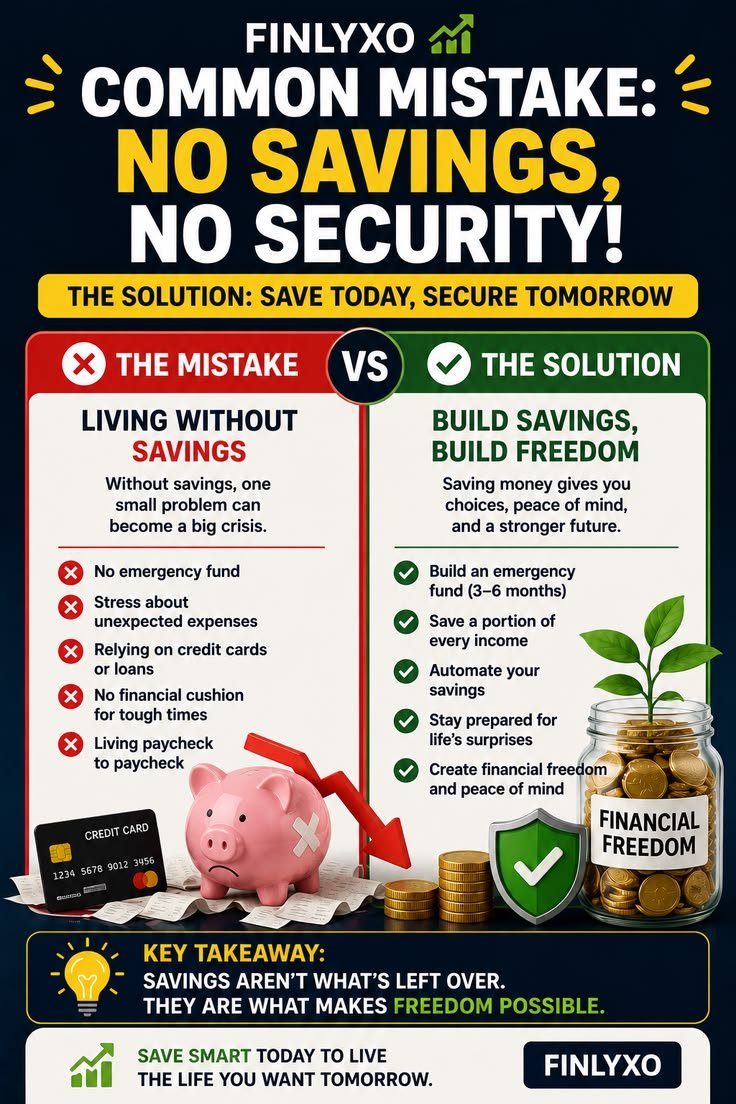
Life is full of surprises, and unfortunately, not all of them are pleasant. One day, everything may seem financially stable. You have a steady income, your bills are under control, and your savings account is gradually growing. Then, without warning, an unexpected expense appears. Your car breaks down, you lose your job, a medical emergency occurs, or an urgent family responsibility requires more money than you planned.
Situations like these can quickly disrupt your financial stability, especially when you do not have enough money set aside for emergencies.
The truth is that financial problems do not always happen because people make poor decisions. Sometimes, circumstances change unexpectedly, and even financially responsible individuals can find themselves struggling to cover essential expenses.
This is why protecting your savings is just as important as building them.
Saving money is not simply about watching your bank balance increase every month. It is about creating financial security, preparing for uncertainty, and giving yourself the confidence to handle difficult situations without relying heavily on loans or credit cards.
Whether you earn a modest salary, manage a household, run a small business, or are working toward financial independence, developing strong financial protection habits can make a significant difference.
The good news is that you do not need to be wealthy to protect your money. With careful planning, disciplined spending, and smart financial decisions, you can create a financial safety net that supports you when life becomes unpredictable.
Here are 20 smart and practical ways to protect your savings against unexpected financial problems.
1. Build an Emergency Fund Before Making Risky Financial Decisions
An emergency fund is one of the strongest forms of financial protection you can have.
Unexpected expenses can happen at any time. You might suddenly need to repair your vehicle, replace a broken household appliance, cover medical expenses, or manage several weeks without employment.
Without emergency savings, you may be forced to withdraw money from long-term investments, borrow from friends, or depend on high-interest credit cards.
Start by building a small emergency fund and gradually increase it until you have enough to cover three to six months of essential living expenses.
For example, if your necessary monthly expenses are $2,000, a reasonable emergency savings target would be between $6,000 and $12,000.
If that amount feels overwhelming, begin with $500 or $1,000. The most important thing is to start.
Keep this money in an accessible savings account rather than placing it in investments that could lose value when you need the funds.
2. Create a Realistic Monthly Budget
A budget is more than a list of expenses. It is a financial plan that helps you control your money and prepare for unexpected situations.
Many people experience financial difficulties because they do not have a clear understanding of how much they earn, how much they spend, and how much they can realistically save.
Start by listing your monthly income and essential expenses. Include rent, groceries, transportation, insurance, utilities, debt payments, and other regular responsibilities.
Next, identify unnecessary spending that could be reduced.
Your budget should also include a specific amount for savings and emergency preparation.
Even setting aside $50 or $100 every month can gradually strengthen your financial position.
A realistic budget allows you to enjoy your income today while protecting your ability to handle tomorrow’s challenges.
3. Keep Your Emergency Savings Separate From Everyday Money
One common mistake is keeping emergency savings in the same account used for shopping, entertainment, groceries, and regular bill payments.
When everything is mixed together, it becomes difficult to distinguish between money that should be protected and money available for everyday spending.
A better approach is to create a separate emergency savings account.
This makes it easier to monitor your progress and reduces the temptation to spend money reserved for genuine emergencies.
Consider choosing an account that offers competitive interest, no unnecessary monthly fees, and convenient access to your funds.
You should also avoid linking your emergency savings account to shopping apps or other services that encourage impulse spending.
Your emergency fund should have one primary purpose: protecting your financial stability when unexpected problems arise.
4. Avoid Depending Too Much on Credit Cards
Credit cards can be useful financial tools when managed responsibly. However, depending on them to cover every unexpected expense can create serious financial problems.
Imagine your car requires a $1,500 repair, and you do not have enough savings to pay for it. You put the expense on a credit card and begin making minimum payments.
Unfortunately, interest charges can cause the original debt to become much more expensive.
If another emergency happens before you repay the balance, your financial situation may become even more difficult.
Instead of treating credit cards as your emergency fund, focus on building actual savings.
If you already have high-interest credit card debt, develop a repayment strategy and avoid accumulating additional unnecessary balances.
The goal is to make borrowing a carefully considered financial decision rather than your first response to an unexpected expense.
5. Automate Your Savings Every Month
One of the easiest ways to protect your savings is to make saving automatic.
Many people intend to save money but struggle because they wait until the end of the month to see what remains.
Unfortunately, unexpected purchases and everyday expenses often consume the money before it can be saved.
Set up automatic transfers from your checking account to your savings account shortly after receiving your salary.
For example, if you earn $3,000 monthly, you might automatically transfer $150 into emergency savings.
As your income increases, consider increasing the contribution.
Automation removes some of the stress associated with saving and helps you build financial protection consistently.
Even when life becomes busy, your savings can continue growing in the background.
6. Get Appropriate Health Insurance
Medical emergencies are among the most financially damaging unexpected events a person can experience.
A sudden illness, accident, surgery, or extended medical treatment can create substantial expenses, even for individuals who have been saving responsibly.
Health insurance can help reduce the financial burden of eligible medical expenses.
When choosing coverage, carefully review monthly premiums, deductibles, copayments, coinsurance, provider networks, and out-of-pocket maximums.
Do not choose a policy based only on its monthly price. Consider the overall financial exposure if you need medical treatment.
If you are in the United States, compare available employer-sponsored plans and other eligible coverage options before making a decision.
Appropriate health insurance cannot prevent medical problems, but it can help protect your savings from some of their financial consequences.
7. Reduce Unnecessary Monthly Expenses
Protecting your savings does not always require earning more money. Sometimes, the biggest improvement comes from spending less on things that do not contribute much to your financial well-being.
Review your monthly expenses and look for opportunities to reduce unnecessary costs.
You might discover that you are paying for subscriptions you rarely use, expensive phone plans, frequent food deliveries, or memberships that no longer provide value.
For example, eliminating $15 in unnecessary subscriptions, reducing restaurant spending by $60, and saving another $25 on monthly services could free up $100 every month.
That is $1,200 over a year.
Instead of allowing these savings to disappear into additional spending, transfer the money into your emergency fund.
Small financial adjustments can create meaningful protection when maintained over time.
8. Build Multiple Sources of Income
Depending entirely on one source of income can make your financial situation vulnerable.
If you lose your job, experience reduced working hours, or face an unexpected interruption in your business, your ability to pay essential expenses may be affected.
Developing additional income sources can provide greater financial flexibility.
Depending on your experience and interests, you could consider freelancing, online tutoring, consulting, selling digital products, offering professional services, or starting a small side business.
You do not need to pursue several opportunities simultaneously.
Start with one realistic option that fits your schedule and does not require you to take on unnecessary financial risks.
When additional income begins coming in, avoid spending all of it immediately.
Consider directing a portion toward emergency savings, debt repayment, and other important financial goals.
Multiple income sources will not eliminate every financial risk, but they can make you less dependent on a single paycheck.
9. Protect Your Money From Scams and Financial Fraud
Financial scams can destroy savings that took years to accumulate.
Fraudsters often target people through fake investment opportunities, phishing emails, suspicious text messages, fraudulent phone calls, and websites pretending to represent legitimate financial institutions.
Some scammers promise guaranteed investment returns or claim that you can double your money within a few days.
These promises should immediately raise concerns.
Protect yourself by following basic financial security practices:
- Never share your banking passwords or one-time verification codes.
- Use strong, unique passwords for financial accounts.
- Enable multifactor authentication where available.
- Avoid clicking suspicious links in emails or text messages.
- Verify investment opportunities before transferring money.
- Contact your financial institution through official channels if something seems suspicious.
Remember that legitimate financial opportunities involve risks, and promises of guaranteed extraordinary returns are often warning signs.
Protecting your savings means protecting access to your money as well.
10. Avoid Putting All Your Savings Into One Investment
Investing can help your money grow, but placing all your savings into a single investment can expose you to unnecessary risk.
For example, investing your entire savings in one company’s stock could result in substantial losses if that company experiences financial difficulties.
The same principle applies to speculative assets and investment opportunities you do not fully understand.
Diversification involves spreading investments across different assets to reduce dependence on any single investment.
Depending on your circumstances, a diversified portfolio might include broad-market funds, bonds, and other suitable investments.
However, remember that diversification does not guarantee profits or prevent all losses.
Most importantly, do not invest money that you may need immediately for rent, groceries, medical expenses, or emergency situations.
Keep short-term financial protection separate from long-term investment money.
11. Pay Down High-Interest Debt
High-interest debt can gradually weaken your financial position.
When a large portion of your monthly income goes toward interest payments, you have less money available for savings and unexpected expenses.
Credit card balances, payday loans, and other expensive borrowing arrangements deserve particular attention.
Start by listing your debts, including their outstanding balances, interest rates, and minimum monthly payments.
Consider using the debt avalanche method, which prioritizes the debt with the highest interest rate, or the debt snowball method, which focuses on clearing the smallest balance first.
Continue making minimum payments on all other debts while directing additional money toward your chosen priority.
Once expensive debt is reduced, redirect the money you previously spent on interest and repayments toward building your financial safety net.
12. Prepare for Unexpected Job Loss
Losing a job can create serious financial pressure, especially when you have rent, family responsibilities, loan payments, and other obligations.
Even people with stable employment should prepare for the possibility of an unexpected career interruption.
Start by calculating how much money you would need each month to cover essential expenses without your regular salary.
Next, build emergency savings based on that amount.
You should also keep your résumé updated, maintain professional relationships, and continue developing skills that improve your employment opportunities.
Understand any unemployment benefits or workplace assistance for which you may qualify.
If you lose your job, review your budget immediately and temporarily reduce nonessential spending.
Preparing before a job loss occurs gives you more time and flexibility to make thoughtful decisions rather than desperate ones.
13. Purchase Appropriate Insurance to Protect Your Assets
Insurance is an important part of financial planning because unexpected accidents and disasters can create expenses far beyond what most people can comfortably pay from savings.
Depending on your circumstances, consider appropriate coverage for your home, rental property, vehicle, health, and income.
Homeowners and renters insurance can help protect against covered losses involving property and personal belongings.
Auto insurance can provide financial protection against certain accident-related expenses, depending on the policy.
Disability insurance may help replace part of your income if a covered illness or injury prevents you from working.
Life insurance may also be important if family members depend on your income.
Review your policies carefully, paying attention to exclusions, deductibles, coverage limits, and waiting periods.
The right protection depends on your responsibilities, assets, and financial risks.
14. Create a Separate Fund for Predictable Irregular Expenses
Not every unexpected-looking expense is truly an emergency.
Some costs do not happen every month, but they are still predictable.
Examples include annual insurance premiums, vehicle maintenance, holiday expenses, school supplies, property taxes, and routine home repairs.
If you fail to plan for these expenses, they can interrupt your savings goals whenever they arrive.
Create separate savings categories for these irregular costs.
For example, if you expect to spend $600 on annual vehicle maintenance, save $50 monthly toward that expense.
When the bill arrives, the money is already available.
This strategy prevents predictable expenses from repeatedly forcing you to withdraw money from your emergency fund.
15. Be Careful Before Lending Money From Your Savings
Helping family members and friends can be meaningful, especially when someone close to you is experiencing financial difficulties.
However, lending money without considering your own financial position can create serious problems.
Before offering financial assistance, evaluate whether you can afford to lose the money without damaging your essential savings or financial responsibilities.
Never use money reserved for rent, emergency expenses, or important obligations to provide financial support you cannot comfortably afford.
If you decide to lend money, communicate clear repayment expectations and document the arrangement when appropriate.
You can also consider offering a smaller amount as a gift rather than creating an informal loan that may damage your relationship.
Helping others is valuable, but protecting your own financial stability matters too.
16. Review Your Bank Accounts and Financial Statements Regularly
You cannot properly protect your savings if you do not know what is happening with your money.
Regularly reviewing your bank statements can help you identify suspicious transactions, unexpected charges, unnecessary fees, and spending habits that need attention.
Set aside time every week or month to examine your accounts.
Check whether all transactions are legitimate and confirm that automatic payments are still necessary.
If you notice an unfamiliar transaction, contact your financial institution promptly using its official contact information.
Also, review your savings progress and compare it with your financial goals.
These simple habits can help you identify problems early before they become more expensive.
17. Keep Important Financial Documents Organized
Unexpected financial problems can become even more stressful when you cannot find essential documents.
Imagine needing to file an insurance claim, prove ownership of an asset, access a retirement account, or verify a financial transaction.
If your records are disorganized, handling the situation may take longer than necessary.
Keep important financial information organized, including:
- Bank account information.
- Insurance policies.
- Tax records.
- Loan agreements.
- Investment statements.
- Property ownership documents.
- Important financial contacts.
Store digital copies securely and keep physical documents in a safe location.
Use strong passwords and multifactor authentication to protect digital records.
Organizing your financial documents may seem like a small task, but it can make a major difference during difficult situations.
18. Avoid Making Emotional Financial Decisions During a Crisis
Financial emergencies can create fear, frustration, and pressure.
When people feel overwhelmed, they sometimes make rushed decisions that create even bigger problems.
For example, someone facing an unexpected bill might withdraw retirement investments without understanding the possible taxes and penalties.
Another person might accept an expensive loan simply because they need money immediately.
Before making major financial decisions, take time to understand your available options.
Compare borrowing costs, review your savings, contact relevant service providers, and seek qualified financial advice when necessary.
If you are facing a temporary financial difficulty, contact lenders or service providers early to ask whether payment arrangements or hardship programs are available.
A difficult financial situation requires careful planning, not panic.
19. Protect Your Retirement Savings From Short-Term Financial Pressure
Retirement savings are designed to support your future, but unexpected financial problems can tempt people to withdraw money before retirement.
Although accessing retirement funds may sometimes be necessary, early withdrawals can involve taxes, penalties, lost investment growth, or other consequences depending on the account and circumstances.
Before taking money from a retirement account, explore alternatives.
Consider whether you can use emergency savings, negotiate payment arrangements, reduce expenses, or access other appropriate resources.
In the United States, traditional and Roth retirement accounts have different withdrawal and tax rules.
Understand the applicable rules before making decisions.
Your retirement savings represent years of effort and should be protected whenever reasonably possible.
20. Make Financial Planning a Continuous Habit
Protecting your savings is not something you do once and forget.
Your financial responsibilities will change as you grow older, change jobs, start a family, purchase property, or experience new opportunities.
This means your financial protection strategy should evolve as your life changes.
Review your budget, savings goals, insurance coverage, debt obligations, and investment arrangements regularly.
Set aside time every few months to evaluate your financial position.
Ask yourself important questions:
- Am I saving enough for unexpected expenses?
- Have my monthly responsibilities increased?
- Do I have unnecessary debt?
- Is my insurance coverage still appropriate?
- Are my savings easily accessible?
- Am I making progress toward my long-term goals?
Making financial planning a regular habit helps you identify weaknesses before they develop into serious problems.
You do not need a perfect financial plan. You need one that reflects your current circumstances and can adapt when life changes.
Final Thoughts: Protecting Your Savings Is Protecting Your Future
Unexpected financial problems are part of life. Nobody can predict every emergency, prevent every accident, or guarantee that their income will remain stable forever.
However, you can prepare yourself financially so that unexpected situations do not completely destroy your progress.
Building an emergency fund, creating a realistic budget, reducing high-interest debt, maintaining appropriate insurance, protecting your financial accounts, and developing additional income sources are all practical steps toward greater financial security.
Remember that protecting your savings does not mean refusing to enjoy your money or living in constant fear of financial problems. It means finding a healthy balance between enjoying the present and preparing for the future.
You do not have to save thousands of dollars immediately. Start with an amount that fits your income, develop consistent habits, and gradually strengthen your financial foundation.
The most important thing is to avoid waiting until a financial emergency happens before deciding to take your savings seriously.
Your savings represent more than money in a bank account. They represent your security, independence, peace of mind, and ability to face life’s challenges without losing control of your financial future. Protect them today, and give yourself a stronger foundation for tomorrow.
