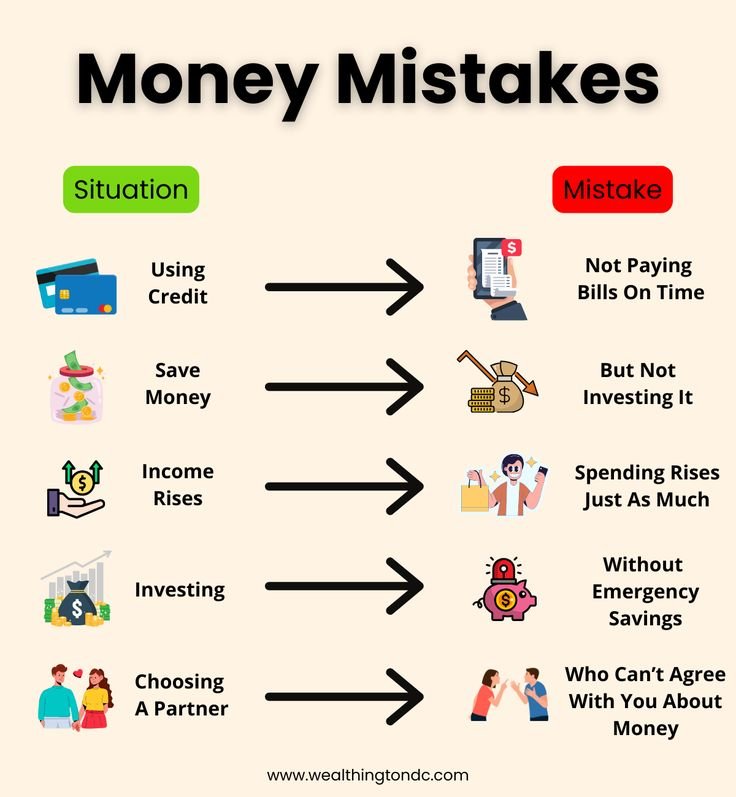
Making smart financial decisions is one of the most important skills anyone can develop. Whether you earn a small monthly salary, manage a growing business, support a family, or work toward financial independence, the choices you make with money can have a lasting impact on your future.
Unfortunately, many people struggle financially not because they do not work hard, but because they make decisions without understanding their long-term consequences. A person may spend more than they earn, borrow money without considering the interest, invest in opportunities they do not understand, or ignore the importance of saving until an unexpected expense creates a serious problem.
These mistakes can gradually damage financial stability and make it difficult to achieve important goals.
The truth is that financial success is not always about earning more money. It is also about knowing how to manage what you already have, recognizing financial risks, and making decisions that support your future rather than creating unnecessary problems.
Think about it: two people can earn the same monthly salary but experience completely different financial outcomes. One may spend everything without planning, while the other saves consistently, avoids unnecessary debt, invests wisely, and prepares for unexpected expenses.
Over time, their financial situations can become dramatically different.
The good news is that making better financial decisions does not require complicated strategies or extraordinary wealth. It begins with developing practical money habits, understanding your priorities, and learning to think carefully before spending, borrowing, saving, or investing.
Whether you are trying to improve your personal finances, build wealth, reduce debt, or protect your savings, these 20 strategies can help you make smarter financial decisions and avoid costly mistakes.
1. Always Create a Financial Plan Before Spending Your Money
One of the biggest financial mistakes people make is spending their income without having a clear plan.
When money enters your bank account, it can be tempting to start paying for different things without considering how much should be reserved for savings, investments, bills, and future responsibilities.
A financial plan gives your money direction.
Start by calculating your monthly income and identifying your essential expenses. Next, determine how much you want to save, invest, and spend on personal activities.
For example, if your monthly take-home income is $3,500, you might allocate money toward housing, groceries, transportation, insurance, savings, investments, and entertainment.
Your financial plan does not need to be complicated. It simply needs to reflect your income, responsibilities, and long-term goals.
Before making a significant purchase, check whether it fits into your financial plan.
This simple habit can prevent unnecessary spending and help you remain focused on your financial priorities.
2. Understand the Difference Between Needs and Wants
One of the most valuable financial lessons is learning to distinguish between what you need and what you want.
Needs are expenses necessary for maintaining your basic quality of life. These include housing, food, utilities, transportation, essential healthcare, and other important responsibilities.
Wants are purchases that may improve your comfort or enjoyment but are not essential.
For example, having a reliable phone is a need for many people, but purchasing the latest expensive smartphone every year may be a want.
The problem begins when wants become more important than financial responsibilities.
You might spend hundreds of dollars upgrading electronics while struggling to save for emergencies or repay outstanding debt.
Before making a purchase, ask yourself whether the item is genuinely necessary and whether buying it will affect your financial goals.
Learning to control unnecessary wants does not mean living without enjoyment. It means making sure that temporary satisfaction does not damage your long-term financial security.
3. Build an Emergency Fund Before Taking Major Financial Risks
Unexpected financial problems can happen regardless of how carefully you plan your life.
Your vehicle may need expensive repairs, your employer may reduce your working hours, or an unexpected medical expense may appear.
Without emergency savings, you may be forced to borrow money or withdraw investments at an inconvenient time.
An emergency fund provides financial protection when life becomes unpredictable.
A common long-term target is three to six months of essential living expenses. However, you can start with a smaller goal, such as $500 or $1,000.
Keep your emergency savings in an accessible account that is separate from your everyday spending money.
Avoid investing emergency funds in highly volatile assets because you may need access to the money when markets are performing poorly.
Having an emergency fund allows you to make decisions from a position of greater stability instead of reacting to every unexpected expense with panic.
4. Avoid Making Financial Decisions Based on Emotions
Emotions can strongly influence how people spend, save, and invest their money.
When you feel excited, you may purchase something expensive without considering whether you can afford it. When you feel stressed, you might shop to improve your mood. When you become afraid of missing an investment opportunity, you may rush into a risky decision.
These emotional reactions can lead to costly mistakes.
Before making a major financial decision, give yourself time to think.
For nonessential purchases, consider using a 24-hour waiting period. For expensive purchases or significant investments, take several days to research the available options.
Ask yourself:
- Do I genuinely need this?
- Can I afford it without borrowing?
- Have I compared other options?
- What could happen if this decision goes wrong?
- Will this purchase support my financial goals?
Taking time to think can prevent temporary emotions from creating long-term financial problems.
5. Live Within Your Income and Avoid Lifestyle Inflation
Earning more money does not automatically make someone financially successful.
One common mistake is increasing spending every time income increases.
For example, someone receives a salary increase and immediately moves into a more expensive apartment, purchases a luxury vehicle, upgrades their lifestyle, and increases entertainment spending.
Although their income has grown, their financial position may remain unchanged.
This is known as lifestyle inflation.
A smarter approach is to allow your savings and investments to grow whenever your income increases.
If you receive an additional $500 monthly, consider directing a meaningful portion toward financial goals instead of spending the entire amount.
You can still enjoy a better lifestyle, but make sure your expenses do not grow faster than your income.
Living within your means creates room for saving, investing, and preparing for future responsibilities.
6. Research Carefully Before Investing Your Money
Investing can be an effective way to build long-term wealth, but making investment decisions without proper research can result in significant losses.
One dangerous mistake is investing because someone promises guaranteed profits or claims that a particular opportunity will make you rich quickly.
Before investing, understand how the investment works, what risks are involved, how fees are charged, and whether it matches your financial goals.
You can begin by learning about diversified index funds, exchange-traded funds, bonds, and other investment options.
Consider your investment timeline, financial responsibilities, and ability to tolerate market fluctuations.
Avoid investing money you need for immediate expenses.
Remember that legitimate investments involve risk, and past performance does not guarantee future results.
The goal should not be to become rich overnight. It should be to make informed decisions that support sustainable financial growth.
7. Compare Prices Before Making Major Purchases
Many people spend more money than necessary simply because they purchase the first product or service they find.
Whether you are buying a vehicle, electronics, furniture, insurance, or household equipment, comparing prices can help you avoid unnecessary expenses.
However, do not focus only on the cheapest price.
Consider product quality, durability, warranties, maintenance costs, and customer service.
For example, purchasing an inexpensive appliance that breaks after a short period may cost more in the long run than buying a reliable product at a slightly higher price.
Before making major purchases, research different sellers, compare available options, and read trustworthy customer reviews.
A few minutes of research can sometimes save hundreds of dollars.
8. Understand the True Cost of Borrowing Money
Borrowing money can help you manage certain financial needs, but it can also create serious problems when you do not understand the repayment terms.
A loan is not simply about receiving money today. It is about accepting an obligation to repay that money, often with additional interest and fees.
Before accepting a loan, examine the annual percentage rate (APR), repayment period, monthly payments, origination fees, and total amount you will repay.
For example, a loan with a low monthly payment may seem affordable, but a longer repayment period could result in significantly higher total interest costs.
Be particularly careful with payday loans, high-interest credit cards, and other expensive borrowing arrangements.
Never borrow money simply because a lender approves you.
The most important question is whether the loan fits your financial situation and whether you can comfortably manage the repayments.
9. Make Saving a Regular Financial Priority
Saving should not be something you do only when you have extra money.
If you wait until the end of the month to save whatever remains, you may discover that most of your income has already been spent.
A better strategy is to save immediately after receiving your salary.
Choose a realistic percentage of your income and transfer it into a separate savings account.
For example, if your monthly income is $3,000, you could begin by saving $150 or $300, depending on your financial responsibilities.
As your income grows, gradually increase your savings contributions.
Automating transfers can make the process easier and reduce the temptation to spend money intended for your future.
Consistent saving builds financial discipline and creates opportunities to handle emergencies without relying on debt.
10. Pay Attention to Interest Rates and Financial Fees
Small financial charges can become expensive when they accumulate over time.
Bank maintenance fees, overdraft charges, credit card interest, loan fees, and investment management expenses can gradually reduce the money available for your financial goals.
Review your financial statements regularly and identify unnecessary charges.
For credit cards and loans, understand the interest rates and how payments are applied.
For investment accounts, compare expense ratios, advisory fees, and transaction costs.
Even a seemingly small difference in annual investment expenses can have a meaningful effect on long-term returns.
Do not ignore financial fees simply because each individual charge appears insignificant.
Understanding where your money goes helps you make better financial decisions and avoid paying for services you do not need.
11. Avoid Impulse Buying and Unnecessary Shopping
Impulse buying is one of the easiest ways to lose control of your finances.
You might see an attractive online advertisement, receive a promotional offer, or visit a store intending to purchase one item but leave with several unnecessary products.
These purchases can gradually consume money that could have been used for savings or debt repayment.
To control impulse spending, create a shopping list before visiting stores.
Avoid shopping when you are bored, stressed, or trying to impress other people.
You can also remove saved payment information from shopping websites to make unnecessary purchases less convenient.
Before buying something expensive, ask yourself whether you would still want it if there were no discount or promotion.
Remember that saving money by not purchasing something unnecessary is often better than buying it simply because it is on sale.
12. Plan for Retirement as Early as Possible
Retirement may feel like a distant event, particularly when you are young and focused on current financial responsibilities.
However, delaying retirement planning can make it more difficult to accumulate sufficient savings later.
Starting early gives your investments more time to potentially benefit from compound growth.
Consider exploring workplace retirement plans, such as a 401(k), or individual retirement accounts where appropriate.
If your employer offers matching contributions, understand the eligibility requirements and consider contributing enough to receive the full available match if your budget allows.
Review the investment options, fees, contribution limits, and tax implications.
You do not need to contribute enormous amounts immediately.
The important thing is to begin with an affordable amount and increase contributions as your income grows.
Planning for retirement today can help protect your financial independence in the future.
13. Protect Your Personal and Financial Information
Financial security involves more than managing spending and investments. It also means protecting your money from fraud and unauthorized access.
Scammers constantly develop new ways to trick people into revealing sensitive financial information.
They may use fake bank messages, fraudulent investment opportunities, phishing emails, or phone calls pretending to come from legitimate organizations.
Protect yourself by using strong passwords, enabling multifactor authentication, and avoiding suspicious links.
Never share your banking password, PIN, or one-time verification codes with someone who contacts you unexpectedly.
Regularly review your financial accounts for unfamiliar transactions.
If something seems suspicious, contact your bank directly using its official website or phone number.
Protecting your financial information is an essential part of protecting the money you have worked hard to earn.
14. Set Clear Financial Goals Before Making Big Decisions
Financial decisions become easier when you understand what you are trying to achieve.
Without clear goals, it is easy to spend money without considering whether those purchases support your long-term priorities.
Your goals might include paying off credit card debt, purchasing a home, building an emergency fund, starting a business, or preparing for retirement.
Give each goal a specific target and realistic deadline.
For example, if you want to save $5,000 within two years, you would need to contribute approximately $209 monthly, excluding interest earned.
Breaking large financial goals into smaller monthly actions makes them easier to manage.
Before making a major purchase, consider whether it will move you closer to your goals or delay your progress.
Financial planning becomes more meaningful when every decision has a clear purpose.
15. Do Not Compare Your Financial Life With Other People
Social media often creates unrealistic expectations about money and success.
You may see people purchasing expensive vehicles, traveling internationally, wearing luxury clothing, or showing off beautiful homes.
It can be tempting to believe that you need the same lifestyle to be successful.
However, you rarely know the complete financial situation behind what someone displays online.
A person who appears wealthy may have significant debt, while someone who lives modestly may have substantial savings and investments.
Comparing your financial journey with others can encourage unnecessary spending and poor financial decisions.
Instead, focus on your own income, responsibilities, and goals.
Financial success should be measured by your ability to meet your obligations, build savings, reduce debt, and create long-term security.
Your progress matters more than someone else’s appearance of wealth.
16. Learn Continuously About Personal Finance
Financial knowledge is one of the most valuable tools you can develop.
The more you understand budgeting, investing, borrowing, taxes, insurance, and retirement planning, the better prepared you will be to make informed decisions.
You do not need to become a professional financial adviser to manage your money responsibly.
Start by reading reliable financial education materials, listening to educational podcasts, attending workshops, and studying basic investment principles.
Learn how interest works, how inflation affects purchasing power, and how different financial products operate.
Be careful about accepting financial advice from social media personalities who make unrealistic promises.
Whenever a financial decision involves complicated tax, legal, or investment issues, consider seeking guidance from a qualified professional.
Continuous learning helps you recognize opportunities, understand risks, and avoid mistakes that could affect your financial future.
17. Review Your Financial Progress Regularly
Making a financial plan is important, but reviewing that plan is equally necessary.
Your financial situation can change as your income increases, expenses rise, family responsibilities develop, or new opportunities appear.
Set aside time every month to review your finances.
Check your savings balance, outstanding debt, monthly expenses, investment contributions, and progress toward your goals.
Ask yourself whether you are spending more than expected or whether certain expenses can be reduced.
If your current financial plan is no longer realistic, make adjustments.
For example, if your income increases, you may decide to increase your savings contributions. If your expenses rise unexpectedly, you may temporarily reduce nonessential spending.
Regular reviews help you identify problems early and keep your financial decisions aligned with your priorities.
18. Avoid Risky Financial Opportunities That Promise Quick Wealth
The desire to become wealthy quickly can make people vulnerable to financial scams and high-risk investments.
You may encounter opportunities promising extraordinary returns with little or no risk.
Some may involve fraudulent investment schemes, fake cryptocurrency projects, unregulated trading platforms, or misleading business offers.
Before committing money, investigate the organization, understand the investment structure, and verify relevant regulatory information.
Be especially cautious when someone pressures you to invest immediately or discourages you from asking questions.
Never invest money simply because friends, relatives, or online personalities claim they are making huge profits.
If an opportunity sounds too good to be true, take a step back and investigate carefully.
Building wealth takes time, patience, and informed decisions. You do not need to gamble your financial security to improve your future.
19. Choose Financial Products That Match Your Actual Needs
Banks, lenders, insurers, and investment companies offer numerous financial products.
Although these products can provide valuable services, not every option is suitable for every individual.
For example, someone who needs immediate access to emergency savings may not benefit from locking all their money into a long-term investment.
Similarly, a person who rarely travels may not need an expensive credit card designed primarily for frequent travelers.
Before choosing a financial product, identify what you actually need.
Compare interest rates, fees, accessibility, terms, and potential risks.
Read the agreement before signing and ask questions about anything you do not understand.
Avoid selecting products simply because they are heavily advertised or recommended by someone who may not understand your circumstances.
The best financial product is not necessarily the most popular or expensive one. It is the one that supports your needs without creating unnecessary costs.
20. Think About the Long-Term Consequences of Every Major Financial Decision
One of the strongest financial habits you can develop is learning to think beyond the immediate moment.
A decision may seem beneficial today but create financial pressure several years later.
For example, purchasing an expensive vehicle with a large loan may provide temporary satisfaction, but the monthly payments, insurance, fuel, and maintenance costs could limit your ability to save and invest.
Similarly, withdrawing retirement savings to fund unnecessary purchases may reduce your future financial security.
Before making major financial decisions, consider the long-term consequences.
Ask yourself how the decision will affect your savings, income, debt, financial responsibilities, and future opportunities.
Think about both the benefits and the potential risks.
You do not need to avoid every financial risk. Some decisions, such as investing in education or starting a business, may involve uncertainty but offer meaningful long-term opportunities.
The key is to understand what you are committing to and make decisions based on careful evaluation rather than temporary excitement.
Final Thoughts: Better Financial Decisions Create a Stronger Financial Future
Making better financial decisions is not about being perfect with money. It is about developing habits that protect your income, reduce unnecessary risks, and create opportunities for long-term growth.
Every financial decision matters, whether you are purchasing groceries, choosing a loan, opening a savings account, investing for retirement, or deciding whether to make an expensive purchase.
The small choices you make consistently can have a much greater impact than occasional financial decisions.
Start by creating a realistic budget, separating needs from wants, building emergency savings, avoiding unnecessary borrowing, and setting clear financial goals.
Take time to research before investing, compare financial products, protect your personal information, and learn from your financial mistakes.
Most importantly, do not allow pressure from society, social media, or temporary emotions to determine how you manage your money.
You do not need to earn a huge salary to become financially responsible. You need to understand your income, control your expenses, and make decisions that support your future.
Remember that financial success is not simply about how much money you make. It is about how wisely you manage it, how carefully you protect it, and how effectively you use it to create the life you want.
Your financial future is shaped by the decisions you make today. Choose wisely, remain consistent, and give your money a purpose. Every smart financial decision brings you one step closer to greater stability, financial independence, and lasting peace of mind.
