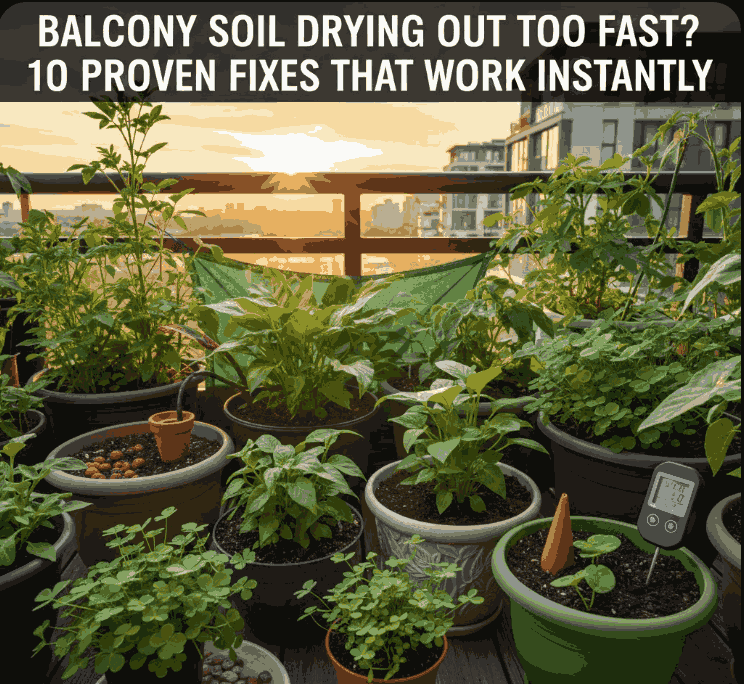
If your balcony plants keep wilting even though you water them regularly, fast-drying soil is likely the culprit. Containers on balconies lose moisture much quicker than garden beds because of wind exposure, direct sun, shallow soil depth, and heat reflected from walls or railings. When soil dries too quickly, roots cannot absorb enough water, nutrients get locked out, and plant stress increases.
This guide explains why balcony soil dries fast and provides 10 proven, practical fixes you can apply immediately to retain moisture, improve soil health, and keep your plants thriving.
Why Balcony Soil Dries Out Faster Than Ground Soil
Understanding the cause helps you apply the right solution. Balcony containers dry quickly due to:
- Limited soil volume – Less soil means less water storage capacity.
- Increased airflow – Wind speeds evaporation.
- Heat reflection – Concrete and metal surfaces radiate heat.
- Container material – Terracotta and fabric pots lose moisture faster than plastic or glazed ceramic.
- Direct sunlight – South-facing balconies receive intense heat exposure.
When multiple factors combine, even daily watering may not be enough.
10 Proven Fixes That Work Instantly
1. Switch to Moisture-Retentive Potting Mix
Standard garden soil drains too quickly in containers. Use a high-quality potting mix designed for containers that contains coco coir, peat moss, vermiculite, or compost. These materials hold water while still allowing airflow to roots.
Quick Tip: Mix 20–30% compost into your soil to increase water retention instantly.
2. Add Mulch on Top of Soil
Mulching is one of the fastest ways to stop moisture loss. A 1–2 inch layer of mulch slows evaporation, regulates soil temperature, and prevents crust formation.
Best balcony mulches:
- Coconut husk chips
- Wood bark
- Straw
- Pebbles (for decorative setups)
Mulch works immediately and can reduce watering frequency by up to 50%.
3. Water Deeply Instead of Frequently
Light watering only moistens the surface. Deep watering ensures moisture reaches root level and lasts longer.
Correct method:
Water slowly until liquid drains from the bottom holes. Wait until the top inch of soil dries before watering again.
Deep watering encourages deeper roots, making plants more drought resistant.
4. Use Self-Watering Pots or Reservoir Containers
Self-watering containers have a bottom reservoir that supplies moisture gradually through capillary action. These systems maintain consistent hydration and prevent sudden drying.
They are especially useful for:
- Herbs
- Leafy greens
- Flowering annuals
- Seedlings
5. Move Plants Away from Direct Afternoon Sun
Balconies exposed to harsh midday or afternoon sun cause rapid evaporation. Reposition containers so they receive morning sunlight but afternoon shade.
If moving isn’t possible, create shade using:
- Shade cloth
- Outdoor curtains
- Bamboo blinds
- Tall companion plants
Even partial shade can significantly reduce moisture loss.
6. Choose the Right Container Material
Container type directly affects how fast soil dries.
Best moisture-retaining containers
- Plastic pots
- Glazed ceramic pots
- Metal containers with lining
Fast-drying containers
- Terracotta
- Clay
- Fabric grow bags
If you already have porous pots, line them with plastic or add a moisture-retaining inner liner to slow evaporation.
7. Increase Soil Depth
Shallow containers dry much faster than deep ones. If possible, upgrade to deeper pots or add a soil extension layer.
Minimum recommended depths:
- Herbs: 6–8 inches
- Vegetables: 10–12 inches
- Tomatoes: 14–18 inches
More soil volume equals more stored moisture.
8. Add Water-Holding Amendments
Certain additives dramatically improve water retention.
Top moisture-boosting soil amendments:
- Vermiculite
- Hydrogel crystals
- Coconut coir
- Compost
- Biochar
Hydrogel crystals are especially effective because they absorb water and release it slowly to roots.
9. Reduce Wind Exposure
Wind is a hidden cause of soil drying. Even mild airflow pulls moisture from soil and leaves.
Wind protection solutions:
- Balcony screens
- Transparent acrylic panels
- Plant grouping
- Trellises
- Railing covers
Grouping plants together creates a humid microclimate that slows evaporation.
10. Water at the Right Time of Day
Timing affects how much water your plants actually absorb.
Best time: Early morning
Second best: Late evening
Avoid watering during midday heat because most moisture evaporates before roots can absorb it. Morning watering allows plants to hydrate before temperature rises.
Bonus Instant Fix: Double Potting Method
This trick works immediately if soil keeps drying:
- Place your plant pot inside a slightly larger container.
- Fill the gap between pots with moist moss or coco coir.
- Keep this outer layer damp.
The outer layer acts as insulation and reduces evaporation from the inner pot.
Signs Your Balcony Soil Is Too Dry
Watch for these warning indicators:
- Soil pulling away from pot edges
- Leaves wilting midday
- Dry, crusty soil surface
- Water running straight through without absorption
- Stunted growth
If you notice these signs, apply two or three fixes from the list above right away.
Best Plant Choices for Dry Balcony Conditions
If your balcony environment is naturally hot and dry, consider growing drought-tolerant plants:
- Succulents
- Rosemary
- Thyme
- Lavender
- Portulaca
- Bougainvillea
These plants require less moisture and perform well in containers.
Common Mistakes That Make Soil Dry Faster
Avoid these errors that worsen moisture loss:
- Using garden soil instead of potting mix
- Choosing small pots for large plants
- Skipping mulch
- Watering lightly every day
- Leaving plants in strong wind
Correcting these mistakes often solves the problem without additional tools.
Pro Maintenance Routine for Consistent Moisture
Follow this weekly routine to maintain ideal hydration:
Daily
- Check soil moisture with finger test.
Every 3 days
- Rotate pots for even sunlight exposure.
Weekly
- Add water-retaining fertilizer or compost tea.
Monthly
- Refresh mulch layer.
Consistency is the key to stable soil moisture.
Frequently Asked Questions
1. Why does water run straight through my balcony soil?
This usually means soil has become hydrophobic from extreme dryness. Rehydrate by soaking the pot in a bucket of water for 20 minutes.
2. How often should balcony plants be watered?
Most need watering every 1–3 days, depending on sun, wind, and pot size.
3. Does adding sand help retain moisture?
No. Sand increases drainage and can make soil dry faster.
4. Can I fix dry soil without repotting?
Yes. Add mulch, water deeply, and mix compost into the top layer.
5. Are self-watering pots worth it?
Yes, especially for hot climates or people who cannot water daily.
Final Thoughts
Fast-drying soil is one of the most common challenges balcony gardeners face, but it is also one of the easiest problems to fix. By improving soil composition, choosing the right containers, adjusting watering habits, and protecting plants from sun and wind, you can dramatically increase moisture retention almost instantly.
Start with quick solutions like mulching and deep watering today, then gradually implement long-term fixes such as better soil mix and container upgrades. Once your soil maintains consistent moisture, your balcony plants will grow faster, stay healthier, and require less daily maintenance.

Umair Abdullah is a dedicated balcony gardening writer who helps urban growers cultivate vegetables, herbs, and plants in small spaces. He focuses on practical, beginner-friendly methods and shares tested tips to make balcony gardening simple, productive, and enjoyable.