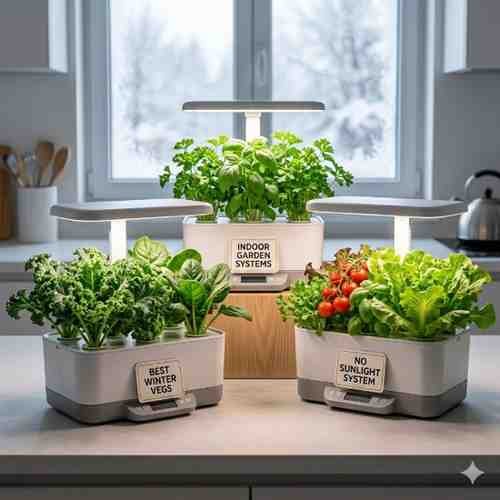
Winter is a challenging season for gardeners. Shorter days, cold temperatures, frost, and limited sunlight make growing vegetables outside nearly impossible in many regions. But what if you didn’t need sunlight to grow your favorite leafy greens, herbs, and hearty winter vegetables? What if you could harvest fresh produce all winter — right from your living room, kitchen, or basement?
Thanks to modern indoor garden systems, this is no longer a dream. Indoor growing technology has evolved rapidly, offering solutions that allow anyone — from beginners to serious growers — to cultivate healthy, vibrant vegetables without relying on natural sunlight.
In this guide, we’ll explore:
- 🌱 Why indoor garden systems are perfect for winter gardening
- 🌞 How plants grow without sunlight
- 🔌 Different types of indoor gardening technologies
- 🏆 The best indoor garden systems for growing winter vegetables
- 🥬 What winter vegetables grow best indoors
- 🧠 Expert tips for maximizing yields and success
Let’s dive in!
Why Choose Indoor Garden Systems for Winter Vegetables?
Winter poses several challenges to traditional gardening:
- 🥶 Freezing temperatures
- 🌤 Limited natural light
- ❄️ Fewer frost-free days
- 🐛 Pest problems inside and outside
Indoor gardening systems solve these issues by providing:
1. Controlled Environment
Grow lights, temperature control, and moisture management create ideal growing conditions — independent of the weather outside.
2. Extended Growing Seasons
You’re no longer limited by seasonal light. Instead of spring to fall, you can garden year-round.
3. Higher Yields
Many indoor systems optimize growing conditions to speed up plant growth and increase production.
4. Space Efficiency
Most systems are compact and perfect for apartments, kitchens, or small living areas.
How Indoor Garden Systems Let Plants Grow Without Sunlight
Plants need three things to grow:
- Light
- Water
- Nutrients
Sunlight normally provides the light component, but indoor systems replace it using artificial lighting, such as:
🌈 LED Grow Lights
- Most efficient and energy-saving
- Light tailored to plant needs
- Minimizes heat output
🔆 Fluorescent Lights
- Less expensive
- Good for seedlings and herbs
- Not as powerful as LEDs
🔥 High-Intensity Discharge (HID) Lights
- Stronger light output
- Used by advanced growers
- Produces more heat
These light sources imitate sunlight’s wavelengths — especially red and blue light — which are essential for photosynthesis. With the right spectrum and duration, plants thrive indoors as if they were outside on a sunny day.
Types of Indoor Garden Systems for Winter Vegetables
Before we dive into the best products, let’s define the main systems available:
🔹 1. Hydroponic Systems
Grow plants in nutrient-enriched water — no soil required.
Pros:
- Faster growth
- Lower risk of soil disease
- Water efficient
Cons:
- Slightly more complex for beginners
🔹 2. Aeroponic Systems
Plants hang in air and mist nutrients directly to the roots.
Pros:
- Highest growth speed
- Excellent oxygen access
Cons:
- Usually more expensive
🔹 3. Soil-Based Indoor Gardens
Traditional growing in soil but with added grow lights.
Pros:
- Familiar for most gardeners
- Easier to start
Cons:
- Soil can harbor pests
- Slower than hydroponics
🔹 4. Smart All-in-One Systems
Plug-and-play units with lights, water reservoirs, and nutrient systems integrated.
Pros:
- Beginner friendly
- Minimal setup
Cons:
- May be pricier
Top Indoor Garden Systems to Grow Winter Vegetables Without Sunlight
Now let’s explore the best products and systems available — optimized for SEO and user search intent.
🥇 1. AeroGarden Harvest Elite — Winner for Beginners
The AeroGarden Harvest Elite is one of the most popular indoor garden systems worldwide. It’s ideal for growing leafy greens, herbs, and small vegetables in winter.
Key Features:
- Full-spectrum LED grow lights
- Adjustable height lighting
- Water reservoir with automatic reminders
- Easy plug-and-grow pods
Best For:
- Beginners
- Kitchen gardens
- Herbs + lettuce varieties
Why It’s Great for Winter Veggies:
AeroGarden systems provide light and water automatically, so plants get what they need — without sunlight.
💡 Pro Tip: Add leaf lettuce, spinach, and bok choy for winter harvests.
🏆 2. Click & Grow Smart Garden 9
Perfect for small spaces, the Click & Grow Smart Garden 9 uses smart soil pods and built-in lighting to grow without sunlight.
Key Features:
- Smart soil technology
- Energy-efficient LED lights
- 9 plant slots
- Low maintenance
Best For:
- Apartment gardeners
- Beginners
- Herbs and salad greens
Why It’s Excellent:
The system senses plant needs and adjusts lighting — a true plug-and-grow experience.
💧 3. iDOO Hydroponics Growing System
This hydroponic garden combines power and affordability.
Key Features:
- Multi-shelf design
- Full-spectrum LED
- Water pump for oxygenation
- Large growing capacity
Best For:
- Leafy greens
- Chard, kale, spinach
- Medium-to-large herbs
Why It Works in Winter:
Hydroponic systems like this one give roots constant nutrient access, leading to faster growth — even without sunshine.
🌿 4. Gardyn Home Garden Kit
For those wanting larger harvests, the Gardyn Home Garden Kit is a high-tech, space-saving hydroponic solution.
Key Features:
- Vertical growing system
- AI-powered lighting controls
- Self-watering
- Grows up to 30 plants
Best For:
- Families
- Frequent cooks
- Bigger winter veggies
Why It Stands Out:
AI lighting closely mimics a natural day/night cycle, so plants get optimized growth signals automatically.
🌾 5. Back to the Roots Water Garden + Grow Light
A fun and educational system that combines aquaponics and LED lighting.
Key Features:
- Fish tank + garden top
- LED grow lights
- Natural nutrient cycling
Best For:
- Beginners
- Kids and families
- Basil, lettuce, chives
Why It’s Unique:
Fish waste becomes fertilizer — a natural nutrient source for vegetables without soil or sunlight.
🍃 6. Miracle-Gro Twelve Indoor Growing System
A sleek, smart hydroponic system that adjusts lighting and nutrients automatically.
Key Features:
- Automatic light adjustments
- Modular design
- Nutrient pods included
Best For:
- Herbs
- Lettuce
- Microgreens
Why It’s Noteworthy:
It removes guesswork — ideal for winter growers who want low-effort solutions.
🌱 7. Rise Gardens 6-Pod Indoor Garden
A stylish system with compact design and plenty of growing space.
Key Features:
- Vertical LED light system
- Multiple plant pods
- Water reservoir with monitoring
Best For:
- Small greens
- Dwarf vegetables
Why It Works for Winter:
7 pods give you room for variety — spinach, kale, parsley — all with artificial light.
Best Winter Vegetables to Grow Indoors (Without Sunlight)
Not all vegetables grow equally well indoors, especially in limited light. Here’s what thrives:
🥬 1. Leafy Greens
- Spinach
- Lettuce (all varieties)
- Swiss Chard
- Arugula
These require relatively low light and grow fast.
🌿 2. Herbs
- Parsley
- Cilantro
- Basil
- Mint
Great for winter cooking and fragrant indoors.
🥦 3. Brassicas (Small Varieties)
- Broccoli sprouts
- Baby kale
- Bok choy
Needs moderate light but great nutrients.
🧄 4. Microgreens
- Radish
- Beet greens
- Sunflower greens
Harvest in just 7–14 days!
🍅 5. Dwarf Vegetables
- Cherry tomatoes (small varieties)
- Peppers (small, mild types)
Need higher light but doable with strong LEDs.
How to Choose the Best Indoor Garden System
When picking a system, think about:
✅ 1. Light Intensity & Spectrum
Look for full-spectrum LEDs with adjustable height.
✅ 2. System Type
Hydroponic systems grow faster; smart all-in-one systems are easiest.
✅ 3. Size & Space
Countertop? Wall-mounted? Multi-tier?
✅ 4. Plant Capacity
Kitchen salads vs. family meals.
✅ 5. Budget
Beginners can start small; hobbyists can scale.
Expert Tips for Growing Winter Vegetables Indoors
🎯 Tip 1: Emulate Natural Day/Night Cycles
Plants grow best with a consistent light schedule — usually 12–16 hours of light daily in winter.
💧 Tip 2: Monitor Water & Humidity
Too dry air stunts growth; low humidity is common in heated homes during winter. Consider a small humidifier.
🧂 Tip 3: Use Quality Nutrients
Hydroponic plants rely entirely on your nutrient solution — choose one formulated for leafy greens.
🔄 Tip 4: Rotate Crops Frequently
Harvest older plants before new ones crowd them; best practice for continuous winter harvests.
🪴 Tip 5: Clean Regularly
Clean reservoirs and system parts to prevent mold and algae.
FAQ’s
❓ Can you grow vegetables indoors without sunlight?
Yes! Using artificial lighting (especially LED grow lights) replaces sunlight and ensures plants receive essential energy for photosynthesis.
❓ Will indoor vegetables taste as good as outdoor ones?
Absolutely — many growers say indoor produce tastes fresh, nutrient-rich, and sometimes better than outdoor crops due to consistent growing conditions.
❓ Do indoor garden systems use a lot of electricity?
Modern LED systems are energy-efficient and designed to minimize power use while delivering full-spectrum light. Expect moderate increases in energy use — balanced by fresh produce year-round.
❓ Is hydroponic better than soil for winter vegetables?
It depends on your goals:
- Hydroponics = faster growth, higher yield, less mess
- Soil systems = easier start, traditional feel
For winter productivity, hydroponics typically wins.
Conclusion
Indoor garden systems have transformed home gardening — making year-round vegetable harvests possible even in the darkest months of winter. Whether you want herbs on your kitchen counter, leafy greens in your living room, or hearty brassicas on your balcony, there’s a system designed for you.
From beginner-friendly plug-and-grow setups like AeroGarden and Click & Grow, to high-tech hydroponic giants like Gardyn and Rise Gardens, the options are vast and effective.
With the right system, quality seeds, proper light, and a bit of care — you can enjoy fresh, homegrown winter vegetables no matter how cold or dark it gets outside.

Umair Abdullah is a dedicated balcony gardening writer who helps urban growers cultivate vegetables, herbs, and plants in small spaces. He focuses on practical, beginner-friendly methods and shares tested tips to make balcony gardening simple, productive, and enjoyable.
insightful article thanks.