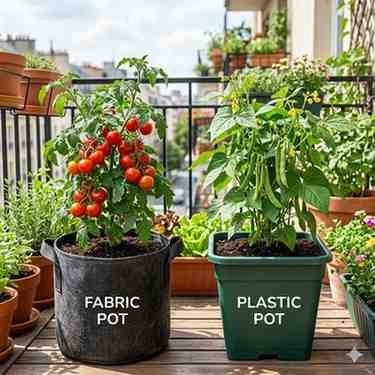
Balcony gardening has exploded in popularity, especially in urban areas where space is limited. Whether you’re growing tomatoes, herbs, or leafy greens, one critical decision can impact your success:
👉 Should you use fabric pots or plastic containers?
At first glance, both seem fine—but the truth is, the container you choose directly affects root health, water retention, plant growth, and overall yield.
In this complete guide, we’ll go deep into the science, real-world performance, pros and cons, and expert recommendations—so you can make the best decision for your balcony garden.
🌱 Understanding the Basics
What Are Fabric Pots?
Fabric pots (also called grow bags) are made from breathable materials like geotextile fabric. Unlike traditional containers, they allow air and water to pass through the sides.
They are specifically designed to improve root development and prevent common container gardening problems.
What Are Plastic Pots?
Plastic pots are the most commonly used containers in gardening. They are made from hard, non-porous materials that hold soil and moisture inside.
They are cheap, durable, and widely available—but they come with some limitations, especially in balcony conditions.
⚔️ Fabric Pots vs Plastic: Deep Comparison
Let’s break this down across the most important factors that actually affect your vegetable growth.
🌿 1. Root Development (The Most Important Factor)
Healthy roots = healthy plants = better yield.
Fabric Pots:
Fabric pots promote something called air pruning.
When roots reach the edge of the pot:
- They are exposed to air
- Growth stops at the tip
- New lateral roots form
👉 This creates a dense, fibrous root system that absorbs more nutrients.
Plastic Pots:
- Roots hit the wall and start circling
- This leads to “root-bound” plants
- Nutrient absorption becomes inefficient
👉 Over time, this reduces growth and yield.
✅ Winner: Fabric Pots (by a huge margin)
💧 2. Drainage & Overwatering
Overwatering kills more plants than underwatering—especially on balconies.
Fabric Pots:
- Excess water drains automatically
- Soil stays well-aerated
- Very low risk of root rot
Plastic Pots:
- Water can accumulate at the bottom
- Requires drainage holes
- Easy to overwater
👉 Beginners often struggle here.
✅ Winner: Fabric Pots
☀️ 3. Temperature Control
Balconies often get intense sunlight, especially in regions like Pakistan.
Fabric Pots:
- Breathable material releases heat
- Keeps roots cooler
- Reduces plant stress
Plastic Pots:
- Heat gets trapped
- Soil temperature rises quickly
- Roots can “cook” in extreme sun
👉 This is a hidden growth killer.
✅ Winner: Fabric Pots
💦 4. Water Retention
Now here’s where plastic pots shine.
Fabric Pots:
- Lose moisture quickly
- Need frequent watering (sometimes daily in summer)
Plastic Pots:
- Hold moisture longer
- Better for water conservation
👉 Important for people who can’t water regularly.
✅ Winner: Plastic Pots
🏗️ 5. Durability & Lifespan
Fabric Pots:
- Last 2–4 seasons
- Can wear out over time
Plastic Pots:
- Can last many years
- Resistant to wear and tear
✅ Winner: Plastic Pots
🧳 6. Portability & Storage
Fabric Pots:
- Lightweight
- Foldable
- Easy to store
Plastic Pots:
- Bulky
- Take up space
✅ Winner: Fabric Pots
🧠 Real Truth: Which One Actually Grows Better Vegetables?
👉 If your goal is maximum growth, healthier plants, and higher yield, fabric pots perform better in most cases.
Why?
- Better root structure
- Less overwatering issues
- Improved oxygen supply
However…
👉 If your goal is low maintenance and water retention, plastic pots may suit you better.
🥬 Best Vegetables for Fabric Pots
Fabric pots are ideal for plants that need:
- Strong root systems
- Good drainage
Top Choices:
- Tomatoes 🍅
- Chili peppers 🌶️
- Eggplant
- Spinach
- Lettuce
- Basil
- Okra
🌿 Best Vegetables for Plastic Pots
Plastic pots work better for:
- Moisture-loving plants
- Shaded balconies
Top Choices:
- Mint
- Coriander
- Spring onions
- Fenugreek (methi)
- Leafy greens
🔥 Climate Factor (Very Important for Pakistan)
In hot climates like Rawalpindi, Lahore, or Karachi:
👉 Fabric pots:
- Prevent overheating
- Improve airflow
- But dry out quickly
👉 Plastic pots:
- Retain water
- But can overheat in direct sun
💡 Pro Tip:
Use fabric pots + mulch (dry leaves/coco peat) to reduce water loss.
⚠️ Common Mistakes to Avoid
❌ With Fabric Pots:
- Not watering enough
- Placing directly on hot concrete
- Using poor soil mix
❌ With Plastic Pots:
- No drainage holes
- Overwatering
- Using dark-colored pots in full sun
🧪 Expert Tip: Best Soil Mix for Both
For best results, use this mix:
- 40% garden soil
- 30% compost
- 20% coco peat
- 10% sand or perlite
👉 This ensures:
- Good drainage
- Proper aeration
- Nutrient-rich growth
💡 Hybrid Strategy (Most Powerful)
Top gardeners don’t choose one—they use both.
👉 Use fabric pots for:
- Tomatoes
- Peppers
- Heavy feeders
👉 Use plastic pots for:
- Herbs
- Leafy greens
- Moisture-loving plants
⚖️ Final Verdict
🏆 Best for Growth & Yield: Fabric Pots
🏆 Best for Convenience & Durability: Plastic Pots
👉 Overall Winner for Balcony Vegetables: Fabric Pots
But the smartest move?
👉 Use both strategically depending on plant type and your routine.
📌 Conclusion
Choosing between fabric pots and plastic containers is not just a small decision—it directly affects your plant health, watering routine, and harvest size.
If you want faster growth, stronger roots, and better harvests, fabric pots are the superior choice.
But if you prefer low maintenance and long-term use, plastic pots still have their place.
👉 The best balcony gardeners understand one thing:
It’s not about the container—it’s about using the right container for the right plant.

Umair Abdullah is a dedicated balcony gardening writer who helps urban growers cultivate vegetables, herbs, and plants in small spaces. He focuses on practical, beginner-friendly methods and shares tested tips to make balcony gardening simple, productive, and enjoyable.