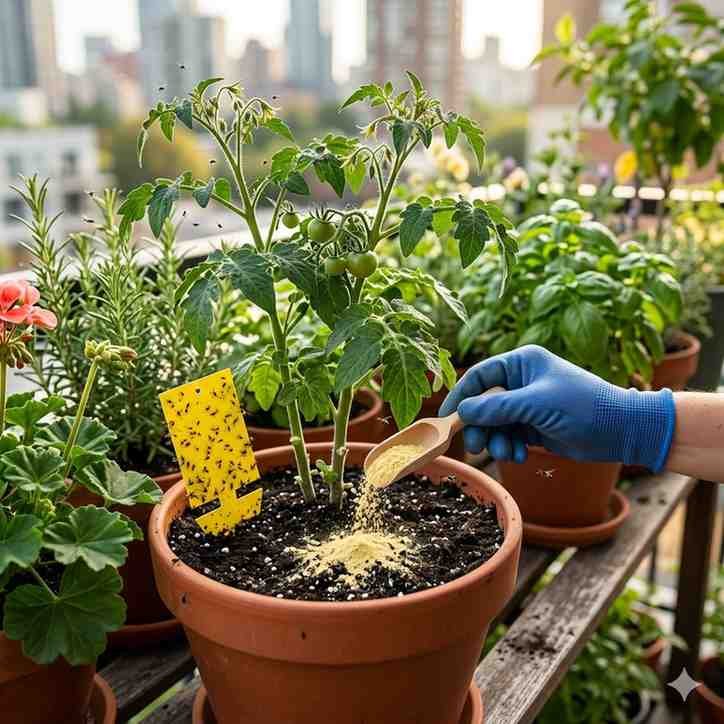
Are your balcony plants attracting tiny, flying pests? Those pesky little insects are likely fungus gnats, and if left unchecked, they can harm your plants’ roots and stunt growth. The good news? With the right strategies, you can get rid of them quickly and prevent future infestations.
What Are Fungus Gnats?
Fungus gnats are small, black or gray flies, usually 1/8 inch long, that hover around the soil of potted plants. They thrive in moist, organic-rich soil, feeding on fungi, decaying plant material, and sometimes young plant roots. While adult gnats are mostly a nuisance, their larvae can damage delicate roots and reduce plant health.
Signs of Fungus Gnats in Balcony Pots:
- Tiny black flies hovering near soil.
- Wilting or yellowing leaves despite proper watering.
- Soil that is constantly wet or has mold on the surface.
- Root damage visible on inspection.
Why Fungus Gnats Appear in Balcony Pots
Several conditions make balcony plants a target for fungus gnats:
- Overwatering: Damp soil is ideal for gnat larvae.
- Poor Drainage: Pots without proper drainage keep soil wet longer.
- Organic Debris: Fallen leaves or composted soil can attract gnats.
- Humid Balcony Environment: Warm, moist air helps gnats thrive.
Fast and Effective Ways to Get Rid of Fungus Gnats
1. Let the Soil Dry Out
Fungus gnat larvae need moisture to survive. Allowing the top 1–2 inches of soil to dry between waterings can break their lifecycle.
2. Use Sticky Traps
Yellow sticky traps are a highly effective way to catch adult gnats. Place them near the pots or stick them directly into the soil surface. The bright yellow color attracts gnats, reducing their population quickly.
3. Replace Topsoil Layer
Remove the top 1–2 inches of infested soil and replace it with fresh, dry potting soil. This removes larvae hiding near the surface.
4. Natural Remedies
- Neem Oil: Mix neem oil with water and spray on soil. It’s safe for plants and repels gnats.
- Hydrogen Peroxide Solution: Mix 1 part 3% hydrogen peroxide with 4 parts water and pour into the soil to kill larvae.
- Cinnamon: Sprinkle cinnamon on the soil surface. It has natural antifungal properties that reduce fungal growth, making the soil less attractive to gnats.
5. Biological Control
Introduce natural predators like beneficial nematodes (Steinernema species) or predatory mites. They feed on fungus gnat larvae and help control infestations without chemicals.
6. Improve Drainage and Pot Hygiene
- Always use pots with drainage holes.
- Avoid leaving water in saucers.
- Remove decaying leaves or plant debris regularly.
Preventing Future Fungus Gnat Infestations
- Water plants only when necessary.
- Avoid over-fertilizing, as excess nutrients attract gnats.
- Use well-draining soil mix.
- Monitor new plants before adding them to your balcony garden.
Conclusion
Fungus gnats may be small, but they can cause significant damage to your balcony plants if ignored. By combining proper watering, soil management, sticky traps, and natural remedies, you can quickly get rid of these pests and protect your green space. Regular maintenance and preventive care ensure your balcony garden remains healthy, pest-free, and thriving.

Umair Abdullah is a dedicated balcony gardening writer who helps urban growers cultivate vegetables, herbs, and plants in small spaces. He focuses on practical, beginner-friendly methods and shares tested tips to make balcony gardening simple, productive, and enjoyable.