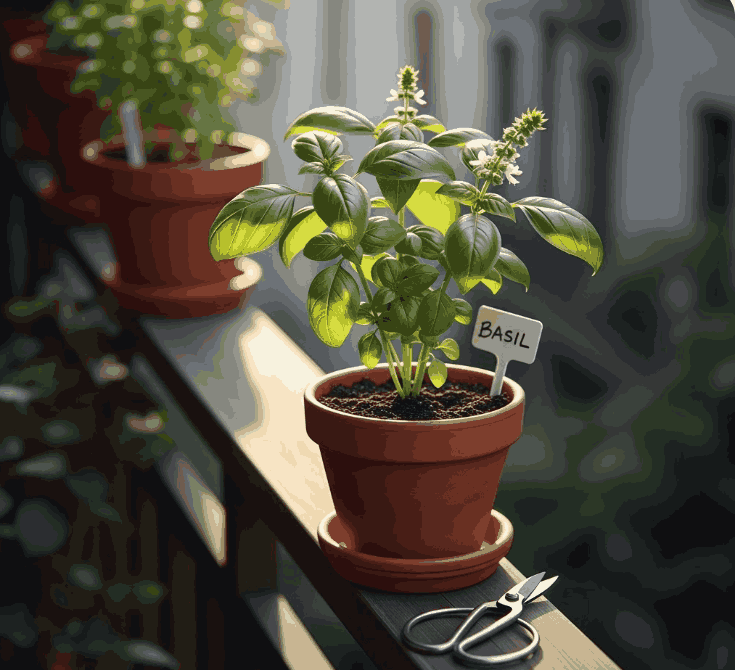
Growing basil on a shaded balcony might seem difficult, but it’s actually very achievable when you understand how basil behaves in low-light environments. While basil is known as a sun-loving herb, it can still thrive in partial shade if you use the right varieties, soil, watering schedule, and lighting techniques. This complete guide explains exactly how to grow healthy basil plants on a shaded balcony using proven gardening methods that work even in apartments and urban homes.
Understanding Basil’s Light Needs
Basil naturally prefers 6–8 hours of sunlight per day, but many balconies—especially those facing north or blocked by buildings—don’t get that much light. Fortunately, basil can adapt to 3–5 hours of indirect sunlight. In shade, basil tends to grow slower, produce softer leaves, and develop a milder flavor. These differences are normal and don’t mean your plant is unhealthy.
The key is maximizing whatever light your balcony receives rather than worrying about full sun exposure.
Choosing the Right Basil Variety for Shade
Not all basil varieties perform well in low light. Selecting shade-tolerant types significantly increases success. The best options include:
- Sweet Basil – hardy and adaptable
- Lemon Basil – tolerates partial shade
- Thai Basil – resilient and fast growing
- Greek Basil – compact and ideal for containers
Avoid varieties bred for large leaves or high oil production because they usually demand intense sunlight.
Selecting the Ideal Balcony Location
Even shaded balconies have micro-spots where light is slightly stronger. Place your basil where it receives:
- Reflected light from walls or windows
- Morning sunlight if available
- Bright indirect daylight
Corners with airflow but no strong wind are best. Basil dislikes cold drafts and sudden temperature changes.
Choosing Containers That Support Healthy Roots
Container choice matters more in shade because soil dries slower. Pick pots that:
- Are 6–10 inches deep
- Have drainage holes
- Are made from breathable materials like terracotta or fabric
Avoid oversized pots because excess soil holds moisture longer and can cause root rot.
Preparing the Best Soil Mix for Shade Conditions
Since shaded soil stays damp longer, your potting mix must be light and fast-draining. A balanced mix looks like this:
- 60% high-quality potting soil
- 30% organic compost
- 10% perlite or coarse sand
This mixture ensures roots get oxygen, nutrients, and proper drainage. Heavy garden soil should never be used in balcony containers because it compacts easily.
Planting Basil Seeds or Seedlings
You can grow basil from seeds or starter plants.
From seeds
- Sow ¼ inch deep
- Keep soil slightly moist
- Germination takes 5–10 days
From seedlings
- Transplant at the same depth as nursery pot
- Water lightly after planting
Seeds adapt better to shade over time, but seedlings grow faster initially.
Watering Basil Correctly in Shade
One of the biggest mistakes beginners make is overwatering shaded plants. Since less sunlight means slower evaporation, basil needs less water than sun-grown plants.
Correct watering method
- Check soil with your finger
- Water only when top inch is dry
- Water slowly until it drains out bottom
Signs of overwatering
- Yellow leaves
- Soft stems
- Fungus on soil surface
Signs of underwatering
- Drooping leaves
- Dry soil pulling from pot edges
Consistency is more important than frequency.
Boosting Light on a Shaded Balcony
If your balcony is dark, you can still improve lighting naturally. Small adjustments can dramatically increase plant growth.
Effective light-boosting tricks:
- Place plants near white or reflective walls
- Use light-colored pots or trays
- Rotate plants every few days
- Hang reflective foil behind pots
- Add a small LED grow light if needed
Even a slight increase in light intensity can double growth speed.
Feeding Basil for Strong Growth
Shade slows photosynthesis, so basil benefits from gentle feeding. Use mild fertilizers instead of strong chemical formulas.
Best feeding schedule:
- Liquid seaweed fertilizer every 2 weeks
- Compost tea once a month
- Diluted organic liquid fertilizer monthly
Avoid high-nitrogen fertilizers because they create weak stems and leggy growth in low light.
Temperature and Climate Requirements
Basil is a warm-weather herb that thrives between 18°C and 30°C (65°F–86°F). On shaded balconies, temperature often stays cooler, which can actually help basil retain moisture and stay fresh longer.
Protect plants from:
- Cold night winds
- Heavy rain
- Sudden temperature drops
If nights are cold, move pots closer to the wall or indoors temporarily.
Pruning for Bushy Growth
Pruning is essential for basil grown in shade because it prevents tall, thin stems. Regular trimming encourages side branches and thicker foliage.
How to prune correctly:
- Wait until plant has at least 6 leaves
- Cut just above a leaf node
- Remove top growth weekly
- Pinch off flower buds immediately
Frequent harvesting is the secret to fuller plants.
Common Problems When Growing Basil in Shade
Shaded balcony basil can face a few predictable challenges. Recognizing them early prevents plant loss.
Leggy stems – caused by insufficient light. Move plant to brighter area.
Yellow leaves – often from overwatering. Reduce watering frequency.
Slow growth – indicates nutrient deficiency. Apply mild fertilizer.
Small leaves – soil lacks nutrients. Refresh potting mix.
Most issues are easy to fix once identified.
Harvesting Basil Properly
Harvesting not only provides fresh leaves but also stimulates new growth.
Best harvesting method:
- Cut leaves from top, not bottom
- Never remove more than one-third of plant
- Harvest regularly to encourage branching
Fresh basil tastes best when harvested just before use because essential oils are strongest then.
Expert Tips for Growing Basil Successfully in Shade
Gardeners who grow herbs in apartments rely on a few proven techniques:
- Rotate pots every 2–3 days for even growth
- Use smaller containers to prevent waterlogging
- Keep plants warm and protected
- Trim regularly for bushiness
- Refresh soil every 2–3 months
These simple habits dramatically improve plant health.
Why Balcony Basil Gardening Is Worth It
Growing basil on a shaded balcony offers more benefits than many people realize. It allows you to harvest fresh herbs anytime, reduces grocery costs, improves your living environment, and adds greenery to small spaces. Even limited sunlight shouldn’t stop you from enjoying homegrown herbs.
Final Words
Learning how to grow basil on a shaded balcony is all about working with your environment rather than fighting it. By selecting shade-tolerant varieties, optimizing available light, using well-draining soil, and maintaining a careful watering routine, you can grow lush, flavorful basil even without direct sun. With patience and proper care, your balcony can become a productive mini herb garden that supplies fresh basil year-round.

Umair Abdullah is a dedicated balcony gardening writer who helps urban growers cultivate vegetables, herbs, and plants in small spaces. He focuses on practical, beginner-friendly methods and shares tested tips to make balcony gardening simple, productive, and enjoyable.
Thanks for the info!