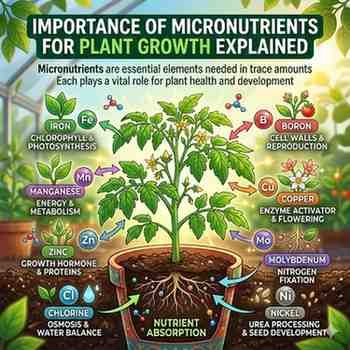
Micronutrients may be required in tiny amounts, but they play massive roles in plant health, productivity, and resilience. While most growers focus on macronutrients like nitrogen, phosphorus, and potassium, neglecting micronutrients can silently limit growth, reduce yields, and cause confusing plant disorders. Understanding how micronutrients function—and how to manage them—can dramatically improve plant performance in gardens, farms, greenhouses, and indoor growing systems.
What Are Micronutrients in Plants?
Micronutrients are essential mineral elements plants need in very small quantities to complete their life cycle. Unlike macronutrients, they are required in trace amounts, but they are not optional. Without them, plants cannot perform critical biochemical processes.
The main essential plant micronutrients are:
- Iron (Fe)
- Zinc (Zn)
- Copper (Cu)
- Manganese (Mn)
- Boron (B)
- Molybdenum (Mo)
- Chlorine (Cl)
- Nickel (Ni)
Agricultural authorities such as the Food and Agriculture Organization and United States Department of Agriculture recognize these elements as vital for plant metabolism and crop production worldwide.
Why Micronutrients Are Essential for Plant Growth
1. Enzyme Activation
Many plant enzymes require micronutrients as cofactors. Without them, metabolic reactions slow or stop entirely. For example:
- Zinc activates enzymes involved in protein synthesis.
- Manganese supports photosynthesis enzymes.
2. Chlorophyll Formation
Iron and magnesium are key for chlorophyll production. Although iron is not part of chlorophyll’s structure, it is essential for the biochemical pathways that synthesize it. Iron deficiency leads to leaf yellowing (chlorosis), especially in new growth.
3. Hormone Regulation
Micronutrients influence plant hormone balance. Zinc, for instance, regulates auxin production, which controls stem elongation and leaf formation.
4. Reproductive Development
Boron and molybdenum are crucial for flowering, pollen formation, and seed production. Crops deficient in boron often show poor fruit set and distorted flowers.
5. Stress Resistance
Adequate micronutrient levels help plants resist:
- Diseases
- Drought
- Temperature extremes
- Salinity
Copper and manganese strengthen plant cell walls and enhance immune responses.
Functions of Each Essential Micronutrient
| Micronutrient | Primary Role | Deficiency Symptoms |
|---|---|---|
| Iron | Chlorophyll synthesis | Yellow young leaves |
| Zinc | Growth hormones | Stunted growth |
| Copper | Enzyme systems | Wilting tips |
| Manganese | Photosynthesis | Interveinal chlorosis |
| Boron | Cell wall formation | Deformed fruits |
| Molybdenum | Nitrogen metabolism | Pale leaves |
| Chlorine | Osmotic balance | Wilting |
| Nickel | Urea metabolism | Poor seed viability |
Micronutrients vs Macronutrients
| Feature | Macronutrients | Micronutrients |
|---|---|---|
| Required Amount | Large | Tiny |
| Examples | N, P, K | Fe, Zn, B |
| Deficiency Speed | Often fast | Sometimes slow |
| Visibility | Obvious symptoms | Subtle at first |
| Application | Frequent | Occasional |
Even though micronutrients are needed in small amounts, deficiencies can be just as damaging as macronutrient shortages.
Common Causes of Micronutrient Deficiencies
- High soil pH – Locks nutrients like iron and zinc.
- Overwatering – Leaches trace minerals.
- Poor soil organic matter – Reduces nutrient retention.
- Imbalanced fertilization – Excess phosphorus can block zinc uptake.
- Sandy soils – Low mineral holding capacity.
Indoor growers and hydroponic gardeners often encounter deficiencies because artificial growing media contain little natural mineral content.
Signs Your Plants Lack Micronutrients
Recognizing early symptoms prevents long-term damage. Watch for:
- Yellowing between leaf veins
- Stunted new growth
- Twisted or distorted leaves
- Poor flowering or fruiting
- Leaf tip burn without fertilizer excess
Symptoms usually appear first on either new leaves or old leaves, depending on whether the nutrient is mobile within the plant.
How to Provide Micronutrients to Plants
1. Use Balanced Fertilizers
Choose fertilizers labeled “complete” or “with trace elements.” These contain essential micronutrients in correct ratios.
2. Apply Chelated Micronutrients
Chelated forms (such as Fe-EDTA) improve nutrient availability, especially in alkaline soils.
3. Improve Soil Health
Adding compost, worm castings, or organic matter naturally increases trace minerals and improves nutrient retention.
4. Foliar Feeding
Spraying diluted micronutrient solutions directly on leaves provides rapid correction of deficiencies.
5. Maintain Proper pH
Most plants absorb micronutrients best in soil pH 6.0–6.5. Outside this range, nutrients become chemically unavailable even if present.
Micronutrients in Hydroponics and Indoor Growing
In soil, trace minerals come from weathered rock and organic matter. In hydroponics, they must be added manually. A complete hydroponic nutrient solution always includes micronutrients because plants cannot obtain them from inert media like coco coir or rockwool.
Indoor growers should monitor:
- Electrical conductivity (EC)
- pH levels
- Nutrient ratios
Even slight imbalances can trigger micronutrient lockout.
Toxicity: Too Much Can Harm Plants
Because plants need only tiny amounts, excessive micronutrients can quickly become toxic. Overapplication may cause:
- Leaf burn
- Root damage
- Nutrient antagonism
- Reduced yield
Always follow recommended dosage rates and avoid mixing multiple micronutrient supplements unless necessary.
Importance for Crop Yield and Food Quality
Micronutrients do more than keep plants alive—they influence crop quality:
- Zinc improves grain protein content.
- Iron enhances leafy vegetable nutrition.
- Boron improves fruit firmness and shelf life.
Farmers who optimize micronutrient management often see higher yields and more nutritious produce.
Natural Sources of Micronutrients
Gardeners can supply trace elements organically through:
- Compost
- Seaweed extracts
- Rock dust
- Bone meal
- Fish emulsion
These sources release nutrients slowly, reducing risk of toxicity and improving soil biology.
Key Takeaways
- Micronutrients are essential despite being required in tiny amounts.
- They support enzyme activity, chlorophyll production, and plant immunity.
- Deficiencies often result from pH imbalance or poor soil conditions.
- Balanced nutrition improves yield, quality, and plant resilience.
- Both deficiency and excess can harm plants, so careful management is crucial.
Conclusion
Micronutrients are the hidden drivers of plant health. They work behind the scenes, regulating vital processes that allow plants to grow, flower, and produce food. Whether you are a home gardener, indoor grower, or commercial farmer, understanding and managing micronutrients can make the difference between average plants and exceptional ones. Paying attention to these trace elements ensures stronger growth, better harvests, and more resilient crops.

Umair Abdullah is a dedicated balcony gardening writer who helps urban growers cultivate vegetables, herbs, and plants in small spaces. He focuses on practical, beginner-friendly methods and shares tested tips to make balcony gardening simple, productive, and enjoyable.
Amazed the info