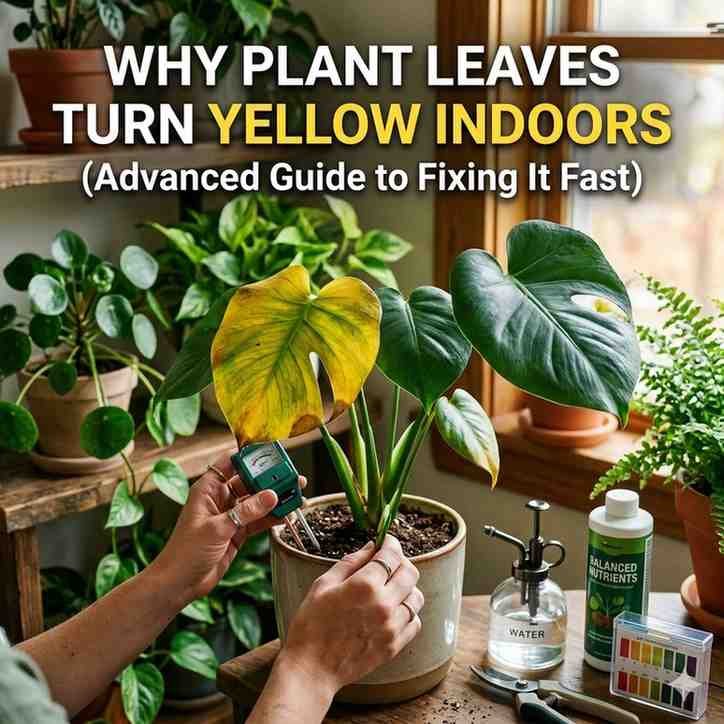
Yellow leaves are one of the most common — and frustrating — problems indoor gardeners face. If your healthy green plant suddenly starts turning pale, dull, or completely yellow, it’s a sign that something is wrong at the root level.
In this advanced guide, you’ll learn exactly why plant leaves turn yellow indoors, how to diagnose the real cause quickly, and how to fix it fast before permanent damage occurs.
What Does Yellowing Leaves (Chlorosis) Mean?
When plant leaves turn yellow, the technical term is chlorosis. This happens when the plant cannot produce enough chlorophyll — the pigment responsible for the green color and photosynthesis.
Without proper chlorophyll production, plants:
- Lose vibrant green color
- Grow slowly
- Develop weak stems
- Drop leaves prematurely
chlorosis in houseplants causes and solutions
Indoor plants are especially prone to yellowing because artificial conditions often disrupt their natural balance.
1. Overwatering (The #1 Cause Indoors)
If your plant leaves are turning yellow and feel soft or mushy, overwatering is the most likely cause.
Why It Happens
Indoor pots often have:
- Poor drainage
- Heavy soil mix
- Watering schedules not based on plant needs
When roots sit in water:
- Oxygen levels drop
- Roots suffocate
- Root rot begins
- Leaves turn yellow from the bottom up
How to Fix It Fast
- Stop watering immediately
- Check drainage holes
- Remove plant and inspect roots (trim brown, mushy roots)
- Repot in well-draining soil mix
- Water only when top 1–2 inches of soil is dry
Advanced tip: Use a moisture meter instead of guessing.
2. Underwatering (Dry Stress Yellowing)
If leaves are yellow, crispy, and curling, underwatering may be the issue.
Signs:
- Dry soil pulling away from pot edges
- Brittle leaves
- Slow growth
Indoor heating systems in winter dry soil much faster than expected.
Fix:
- Deep water thoroughly until water drains out
- Increase humidity
- Maintain consistent watering schedule
3. Poor Drainage & Compacted Soil
Even if watering is correct, bad soil structure can cause yellow leaves.
Compacted soil:
- Blocks oxygen flow
- Traps excess water
- Prevents nutrient absorption
Solution:
- Use airy potting mix (coco coir + perlite + compost)
- Avoid garden soil indoors
- Repot every 12–18 months
4. Nutrient Deficiency (Micronutrient Imbalance)
Yellow leaves often indicate nutrient deficiency — especially nitrogen, iron, or magnesium.
Nitrogen Deficiency
- Older leaves turn yellow first
- Overall pale appearance
Iron Deficiency
- New leaves yellow
- Green veins remain visible (interveinal chlorosis)
Magnesium Deficiency
- Yellowing between veins on older leaves
Indoor plants rely entirely on what you feed them. Unlike outdoor soil, nutrients aren’t replenished naturally.
nutrient deficiency patterns in yellow leaves
Quick Fix:
- Use balanced liquid fertilizer (NPK 10-10-10 or similar)
- Add iron supplement if veins remain green
- Avoid over-fertilizing (can worsen problem)
5. Light Problems (Too Much or Too Little)
Light imbalance is a hidden cause of indoor leaf yellowing.
Too Little Light:
- Pale yellow leaves
- Leggy growth
- Slow development
Too Much Direct Sun:
- Yellow patches
- Burn marks
- Faded color
Move plant gradually to brighter indirect light if needed. Avoid sudden exposure changes.
6. Temperature Stress
Indoor plants prefer stable conditions.
Cold drafts, AC vents, heaters, or sudden temperature drops can shock plants and cause yellow leaves.
Ideal indoor temperature range:
18–27°C (65–80°F)
Keep plants away from:
- Air conditioners
- Heaters
- Windows with cold drafts
7. Low Humidity (Common in Winter)
Dry indoor air pulls moisture from leaves.
Symptoms:
- Yellow edges
- Brown tips
- Leaf curling
Fix:
- Use humidifier
- Place water tray with pebbles under pot
- Group plants together
8. Root Bound Plants
When roots outgrow the pot, nutrient absorption becomes restricted.
Signs:
- Roots coming out of drainage holes
- Soil dries too quickly
- Yellowing despite proper care
Solution:
Repot into container 1–2 inches larger with fresh soil.
9. Pests & Fungal Issues
Indoor pests like spider mites, fungus gnats, and aphids damage leaf tissues.
Check underside of leaves for:
- Tiny webbing
- Sticky residue
- Small insects
Treat using:
- Neem oil spray
- Insecticidal soap
- Proper airflow
10. Natural Aging (Not Always a Problem)
Sometimes yellow leaves are completely normal.
Older leaves naturally die as plant focuses energy on new growth.
If:
- Only bottom leaves are yellow
- New growth is healthy
Simply trim the yellow leaves.
How to Diagnose Yellow Leaves Fast (Step-by-Step Checklist)
- Check soil moisture (wet or dry?)
- Inspect roots if possible
- Examine light exposure
- Look for pests
- Review fertilizing schedule
- Consider temperature and humidity
Do not guess — diagnosis first, treatment second.
Advanced Prevention Strategy for Indoor Plants
If you want zero yellow leaves long-term:
✔ Use high-quality well-draining potting mix
✔ Water based on soil dryness, not schedule
✔ Fertilize lightly but consistently
✔ Provide bright indirect light
✔ Maintain humidity above 40%
✔ Repot annually
✔ Monitor root health
Consistency is key indoors because plants cannot adapt to extreme fluctuations like outdoor plants can.
Why are my indoor plant leaves turning yellow even though I water regularly?
Yellow leaves despite regular watering are usually caused by overwatering, poor drainage, or root rot. When soil stays constantly wet, roots cannot absorb oxygen properly, leading to yellowing from the bottom up. Always check soil moisture before watering and ensure proper drainage.
Can yellow leaves turn green again?
In most cases, fully yellow leaves will not turn green again because chlorophyll has already broken down. However, if the issue is caught early (like mild nutrient deficiency), new growth can return healthy and green once the problem is fixed.
How do I know if yellow leaves are caused by nutrient deficiency?
Look at the pattern of yellowing.
– Older leaves turning yellow first usually indicate nitrogen deficiency.
– Yellowing between green veins often suggests iron or magnesium deficiency.
Using a balanced fertilizer can help restore nutrient levels quickly.
Should I remove yellow leaves from indoor plants?
Yes, trimming yellow leaves is recommended once they are mostly discolored. This helps the plant redirect energy toward healthy growth and prevents potential fungal problems. Use clean, sharp scissors to avoid spreading disease.
How long does it take for indoor plants to recover from yellow leaves?
Recovery time depends on the cause. Minor watering issues may improve within 1–2 weeks, while root rot or severe nutrient deficiencies can take several weeks to months. New healthy growth is the best sign your plant is recovering.
Final Thoughts
If your plant leaves are turning yellow indoors, it’s not random — it’s a signal.
Most cases are caused by:
- Overwatering
- Poor drainage
- Nutrient imbalance
- Light issues
By identifying the exact reason quickly and applying the correct fix, you can restore your plant’s health within weeks.
Yellow leaves are not the end — they’re an early warning system.
Treat the cause, not just the symptom, and your indoor garden will stay lush, green, and thriving all year round.

Umair Abdullah is a dedicated balcony gardening writer who helps urban growers cultivate vegetables, herbs, and plants in small spaces. He focuses on practical, beginner-friendly methods and shares tested tips to make balcony gardening simple, productive, and enjoyable.