Growing vegetables indoors for 90 days is not just a gardening experiment — it’s a realistic method to produce fresh, chemical-free food in small spaces year-round. Whether you live in an apartment, have no balcony, or want a controlled growing environment, a 90-day indoor vegetable challenge can deliver measurable harvests if done correctly.
This detailed guide explains exactly what happens during 90 days of indoor vegetable growing, what results you can realistically expect, which vegetables perform best, and how to maximize yield using proven methods.
Why 90 Days Is the Perfect Indoor Growing Timeline
Most fast-growing vegetables complete their life cycle or produce harvestable leaves within 30–90 days. A 90-day period allows you to:
- Germinate seeds
- Grow strong plants
- Harvest multiple times
- Measure yield realistically
Unlike outdoor gardening, indoor growing removes weather uncertainty. This controlled environment means your results depend almost entirely on lighting, soil quality, watering habits, and temperature control.
Realistic Results After 90 Days of Indoor Growing
Here is what growers commonly achieve within three months when conditions are optimized:
| Vegetable Type | First Harvest | Yield in 90 Days |
|---|---|---|
| Leafy greens | 25–35 days | 4–8 harvests |
| Herbs | 30–40 days | Continuous cutting |
| Radishes | 25–30 days | 2–3 full batches |
| Cherry tomatoes | 70–90 days | First fruit set |
| Green onions | 20–30 days | 3–5 regrowth cycles |
| Microgreens | 7–14 days | 6–10 harvest cycles |
Important: Fruiting vegetables grow slower indoors, so within 90 days you usually get flowering or early fruits, not full production.
Best Vegetables for Indoor Growing Success
Choosing the right crops determines whether your 90-day results are impressive or disappointing.
Top Performers Indoors
These grow fast and tolerate indoor light conditions:
- Spinach
- Lettuce
- Kale
- Arugula
- Mustard greens
- Basil
- Mint
- Cilantro
Moderate Difficulty Crops
Require strong lighting and patience:
- Cherry tomatoes
- Peppers
- Dwarf beans
Avoid for 90-Day Indoor Projects
These need deep soil or long seasons:
- Potatoes
- Corn
- Pumpkins
- Cauliflower
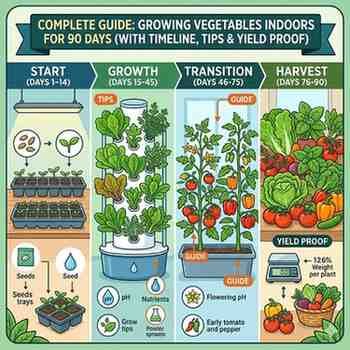
Step-by-Step 90-Day Indoor Growing Plan
Days 1–7: Seed Germination Phase
- Use seed trays or small pots
- Keep soil moist, not wet
- Maintain temperature between 20–25°C
- Provide 12–16 hours of light daily
Seeds usually sprout within 3–7 days depending on crop.
Days 8–30: Seedling Development
During this phase plants establish roots and true leaves.
Focus on:
- Consistent lighting
- Gentle airflow
- Light feeding after day 15
Result by Day 30:
You should see healthy leafy growth and sturdy stems. Fast greens may already be harvestable.
Days 31–60: Rapid Vegetative Growth
This is the fastest growth stage.
Key tasks:
- Transplant into larger pots if roots fill containers
- Increase feeding frequency
- Rotate pots for even growth
- Prune herbs regularly
Result by Day 60:
Multiple harvests of leafy vegetables and herbs.
Days 61–90: Production Phase
Plants reach maturity and begin maximum output.
At this stage:
- Greens regrow quickly after cutting
- Herbs become bushy
- Fruiting crops begin flowering
- Microgreens cycles repeat every 10–14 days
Result by Day 90:
A continuous indoor food supply plus measurable yield data.
Lighting: The Biggest Factor in Indoor Results
Indoor vegetables fail mostly due to insufficient light. Natural window light rarely provides enough intensity.
Ideal Lighting Setup
- Full spectrum LED grow lights
- 12–16 hours daily
- Positioned 6–12 inches above plants
Light intensity directly affects:
- Growth speed
- Leaf size
- Flavor
- Yield
If your plants look tall and thin, they need stronger light.
Soil vs Hydroponics: Which Performs Better in 90 Days?
Both methods can produce strong results.
Soil Growing
- Easier for beginners
- Less equipment
- Slower but stable growth
Hydroponics
- Faster growth rate
- Higher yields
- Requires monitoring nutrients and pH
For a 90-day challenge, soil is recommended for beginners because it’s more forgiving.
Measured Yield Example From a 90-Day Indoor Setup
A simple indoor garden with:
- 6 medium pots
- LED light
- Standard potting mix
Can produce approximately:
- 500–900 grams of leafy greens
- 150–300 grams herbs
- 10–25 cherry tomatoes
These numbers vary depending on care, light intensity, and plant variety.
Common Mistakes That Reduce Results
Avoid these errors if you want strong harvests:
1. Overwatering
Indoor plants dry slower. Excess water causes root rot.
2. Weak Lighting
Insufficient light leads to leggy plants and poor yield.
3. Crowded Pots
Too many plants compete for nutrients.
4. No Feeding Schedule
Indoor soil nutrients run out quickly.
5. Ignoring Airflow
Still air promotes fungal problems.
Proven Tips to Double Indoor Vegetable Yield
Professional indoor growers use these techniques:
- Harvest leaves regularly to trigger regrowth
- Use reflective surfaces around plants
- Maintain steady temperature (20–26°C)
- Feed liquid fertilizer every 10–14 days
- Choose dwarf or compact plant varieties
Consistency matters more than expensive equipment.
What You Actually Learn After 90 Days
Beyond harvesting vegetables, a 3-month indoor growing experiment teaches:
- Plant growth cycles
- Nutrient management
- Lighting optimization
- Water control
- Pest prevention
These skills dramatically improve future harvests.
Indoor Vegetable Growth Timeline Summary
Week 1: Seeds sprout
Week 2–4: Seedlings grow leaves
Week 5–8: Rapid vegetative growth
Week 9–12: Harvest stage and production
By the end of 90 days, your indoor garden should be fully productive and stable.
Is Growing Vegetables Indoors for 90 Days Worth It?
Yes — if done correctly, a 90-day indoor vegetable project can produce real food, not just decorative plants. The key advantage is predictability. Unlike outdoor gardening, your success depends mainly on your setup and care routine.
People who succeed focus on three essentials:
- Strong light
- Proper watering
- Regular feeding
Master these, and indoor growing becomes reliable, scalable, and highly rewarding.
FAQs
1. Can you really grow vegetables indoors in 90 days?
Yes, many fast-growing vegetables like lettuce, spinach, herbs, and radishes can be grown and harvested indoors within 90 days if proper lighting, watering, and nutrients are provided.
2. What vegetables grow fastest indoors?
The fastest indoor vegetables include microgreens, green onions, lettuce, arugula, and radishes, which can be ready to harvest in as little as 7–30 days.
3. How much light do indoor vegetables need daily?
Most indoor vegetables require 12–16 hours of bright light per day. Grow lights are usually necessary because natural window light is rarely strong enough.
4. Do indoor vegetables grow slower than outdoor plants?
Indoor vegetables may grow slightly slower if lighting is weak, but with proper grow lights and temperature control, they can grow just as fast or even faster than outdoor plants.
5. What is the easiest vegetable to grow indoors for beginners?
Lettuce is the easiest vegetable to grow indoors because it grows quickly, needs minimal space, and can be harvested multiple times.
6. Can I grow vegetables indoors without sunlight?
Yes, vegetables can be grown indoors without sunlight by using full-spectrum LED grow lights that mimic natural sunlight.
7. How often should I water indoor vegetables?
Watering frequency depends on plant type and container size, but generally indoor vegetables need watering when the top inch of soil feels dry.
8. What temperature is best for indoor vegetable growth?
Most vegetables grow best indoors at temperatures between 20°C and 26°C, which supports steady growth and prevents stress.
9. Do indoor vegetables need fertilizer?
Yes, indoor plants need regular feeding because nutrients in potting soil get used up quickly. A balanced liquid fertilizer every 10–14 days works well.
10. How much food can you grow indoors in 3 months?
In a small indoor setup with proper lighting, you can grow enough leafy greens and herbs to harvest several servings per week within 90 days.
Final Verdict
Growing vegetables indoors for 90 days delivers real, measurable results when you choose fast-growing crops, provide sufficient lighting, and maintain consistent care. Most beginners are surprised that even a small indoor setup can supply fresh greens weekly within just a few months.
If your goal is fresh food, skill development, or self-sufficiency, a structured 90-day indoor growing plan is one of the fastest ways to achieve visible success in gardening.

Umair Abdullah is a dedicated balcony gardening writer who helps urban growers cultivate vegetables, herbs, and plants in small spaces. He focuses on practical, beginner-friendly methods and shares tested tips to make balcony gardening simple, productive, and enjoyable.