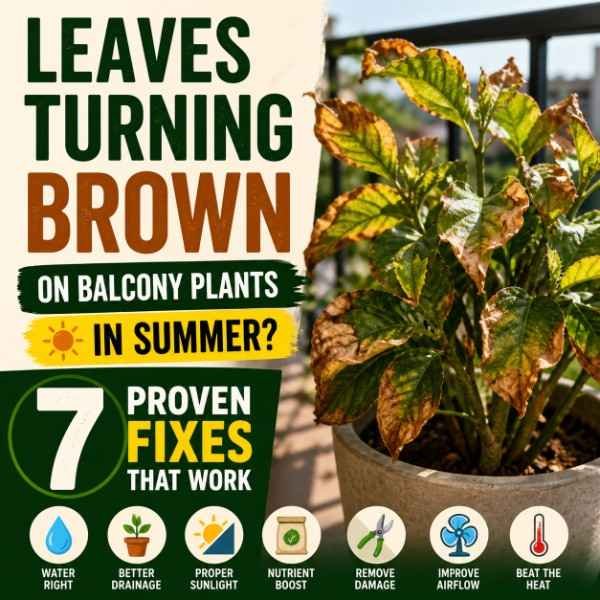
If your beautiful balcony garden starts showing brown, crispy leaves during summer, you’re not alone. High temperatures, intense sunlight, and improper care can quickly stress plants—especially in small balcony spaces.
The good news? Brown leaves are usually fixable if you act early.
In this guide, you’ll discover the 7 proven fixes to stop leaf browning and keep your balcony plants healthy—even in extreme heat.
Why Do Balcony Plant Leaves Turn Brown in Summer?
Before fixing the problem, it’s important to understand the cause. Brown leaves are usually a sign of:
- Heat stress
- Underwatering or overwatering
- Nutrient imbalance
- Sunburn
- Poor soil drainage
- Low humidity
- Salt buildup in pots
Let’s fix them one by one 👇
1. Adjust Your Watering Routine (Most Common Cause)
Problem:
In summer, water evaporates quickly, leaving plants dehydrated.
Fix:
- Water early morning (best) or evening
- Check soil: if top 1–2 inches are dry, water immediately
- Avoid shallow watering—go for deep watering
👉 Tip: Use pots with drainage holes to prevent root rot.
2. Protect Plants from Harsh Afternoon Sun
Problem:
Direct sunlight (especially 12 PM–4 PM) can burn leaves, causing brown edges.
Fix:
- Move pots to partial shade
- Use:
- Shade cloth
- Balcony curtains
- Placement behind railings or walls
👉 Sensitive plants like herbs and leafy greens need filtered light, not full sun.
3. Improve Soil Quality for Better Moisture Retention
Problem:
Poor soil dries too fast and damages roots.
Fix:
Use a well-draining yet moisture-retaining mix, such as:
- Garden soil (40%)
- Compost (30%)
- Cocopeat (30%)
👉 This keeps roots cool and hydrated longer.
4. Increase Humidity Around Plants
Problem:
Hot, dry air causes leaf edges to dry and turn brown.
Fix:
- Mist plants lightly in the morning
- Place a water tray nearby
- Group plants together to create a micro-humid environment
👉 Especially useful for indoor-balcony plants.
5. Avoid Over-Fertilizing in Summer
Problem:
Too much fertilizer = salt buildup, which burns roots and leaves.
Fix:
- Reduce feeding during peak heat
- Use diluted liquid fertilizer (once every 2–3 weeks)
- Flush soil occasionally with clean water
6. Check for Root Problems
Problem:
Roots may be:
- Overheated in small pots
- Rotting due to poor drainage
- Root-bound (no space to grow)
Fix:
- Repot into larger containers
- Use light-colored pots (they absorb less heat)
- Ensure proper drainage holes
7. Remove Damaged Leaves (Encourage New Growth)
Problem:
Dead or brown leaves drain plant energy.
Fix:
- Trim brown or fully damaged leaves
- Use clean scissors to prevent infection
- This helps plant focus on healthy growth
Bonus Tip: Choose Heat-Tolerant Plants 🌿
Some plants naturally handle summer better:
- Basil
- Aloe Vera
- Succulents
- Mint
- Chili plants
👉 If your area gets extremely hot, switch to these for better results.
Common Mistakes to Avoid ❌
- Watering in midday heat (causes shock)
- Using black plastic pots (retain too much heat)
- Ignoring drainage holes
- Overcrowding plants (reduces airflow)
Final Thoughts
Brown leaves don’t mean your plants are dying—they’re asking for better care.
By fixing watering, sunlight exposure, soil quality, and humidity, you can quickly bring your balcony plants back to life—even during intense summer heat.

Umair Abdullah is a dedicated balcony gardening writer who helps urban growers cultivate vegetables, herbs, and plants in small spaces. He focuses on practical, beginner-friendly methods and shares tested tips to make balcony gardening simple, productive, and enjoyable.