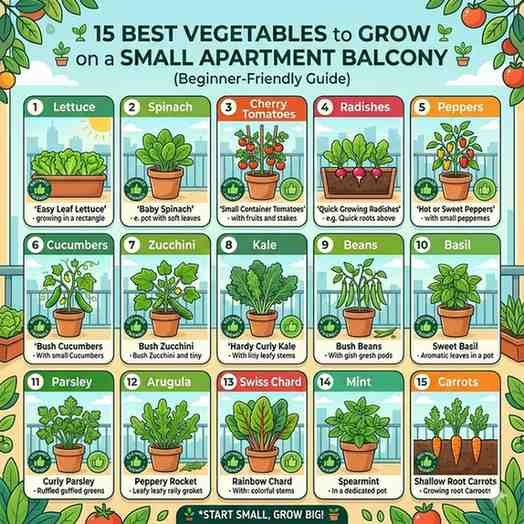
Living in an apartment doesn’t mean you can’t grow your own fresh vegetables. Even a small balcony with 3–4 hours of sunlight is enough to produce a surprising amount of food.
If you’re new to balcony gardening, this beginner-friendly guide will help you choose vegetables that are:
- Easy to grow
- Perfect for containers
- High-yield in small spaces
- Low maintenance
Let’s start with the best vegetables you can grow successfully on a small apartment balcony.
1. Cherry Tomatoes 🍅
Cherry tomatoes are one of the easiest and most productive balcony vegetables.
Why they’re perfect for beginners:
- Grow well in 8–12 inch pots
- Produce dozens of fruits
- Thrive in containers
- Love sunny balconies
Pro Tip: Choose determinate or dwarf varieties for smaller spaces.
2. Lettuce 🥬
Lettuce grows fast and doesn’t require deep pots.
Why it’s great:
- Ready in 30–40 days
- Can grow in shallow containers
- Perfect for partial sunlight
You can harvest outer leaves continuously without removing the entire plant.
3. Spinach 🌿
Spinach is compact and ideal for cool seasons.
Why beginners love it:
- Doesn’t need full sun
- Grows in small grow bags
- High nutritional value
Keep soil consistently moist for best results.
4. Green Onions (Spring Onions)
One of the simplest vegetables to grow.
Why it’s easy:
- Regrows from kitchen scraps
- Needs minimal space
- Can grow in narrow containers
Just place the white root ends in soil or water, and they’ll regrow quickly.
5. Radishes
Radishes grow extremely fast — perfect for beginners who want quick results.
Benefits:
- Ready in 25–30 days
- Grow well in 6–8 inch pots
- Minimal maintenance
Great confidence booster for new gardeners.
6. Chili Peppers 🌶️
Chili plants are compact and very productive.
Why they’re ideal for balconies:
- Thrive in containers
- Require moderate care
- Produce continuously
They also add decorative value to your balcony.
7. Bell Peppers (Capsicum)
Bell peppers need slightly more sunlight but are beginner-friendly.
Growing tips:
- Use 10–12 inch pots
- Provide 5–6 hours of sun
- Support plant with a small stake
8. Bush Beans
Bush beans don’t require trellis like pole beans.
Advantages:
- Compact growth
- High yield
- Fix nitrogen in soil
They are excellent for improving balcony soil quality.
9. Carrots (Short Varieties)
Choose short or round carrot varieties for containers.
Best for:
- 8–10 inch deep pots
- Loose, well-draining soil
- Cool weather
Avoid compact soil for straight root growth.
10. Cucumbers (Dwarf Varieties)
Compact cucumber varieties grow well in small spaces.
Tips:
- Use vertical support
- Choose bush or patio types
- Keep soil moist
Vertical growing saves valuable balcony space.
11. Eggplant (Brinjal)
Dwarf eggplant varieties are ideal for containers.
Why grow it:
- Thrives in warm climates
- Produces well in pots
- Attractive purple fruits
Use at least a 12-inch pot for best yield.
12. Kale
Kale is extremely hardy and nutrient-rich.
Why it’s great for beginners:
- Tolerates partial shade
- Long harvesting period
- Low pest problems
Harvest outer leaves regularly.
13. Swiss Chard
Swiss chard is colorful and decorative.
Benefits:
- Grows in containers
- Tolerates heat better than spinach
- Continuous harvest
Perfect for both beauty and productivity.
14. Garlic
Garlic grows surprisingly well in pots.
Growing basics:
- Plant individual cloves
- Use deep container
- Needs patience (90–120 days)
You can also harvest garlic greens early.
15. Potatoes (Grow Bags)
Yes, you can grow potatoes on a balcony!
How:
- Use grow bags
- Add soil gradually as plant grows
- Harvest after foliage dies back
They require space but are very rewarding.
How to Choose the Right Vegetable for Your Balcony
Before planting, consider:
☀️ Sunlight
- 6+ hours → Tomatoes, peppers, eggplant
- 3–5 hours → Lettuce, spinach, herbs
🪴 Container Size
- Small pots (6–8 inch) → Radish, lettuce
- Medium pots (10–12 inch) → Peppers, beans
- Large grow bags → Potatoes, tomatoes
💧 Watering
Balconies dry out faster due to wind. Check soil daily.
Essential Balcony Gardening Tips for Beginners
- Use lightweight potting mix (not garden soil)
- Ensure proper drainage holes
- Fertilize every 2–3 weeks
- Rotate crops seasonally
- Watch for pests regularly
Small consistency = big harvest.
What are the easiest vegetables to grow on a small apartment balcony?
The easiest vegetables for beginners are cherry tomatoes, lettuce, spinach, radishes, and green onions. These plants grow well in containers, require minimal maintenance, and produce fast results — making them perfect for small balcony spaces.
How much sunlight do balcony vegetables need?
Most vegetables need 4–6 hours of direct sunlight daily. Fruiting plants like tomatoes, peppers, and eggplants require at least 6 hours, while leafy greens like lettuce and spinach can grow with 3–4 hours of sunlight.
Can I grow vegetables on a balcony without full sun?
Yes, you can grow vegetables in partial shade. Leafy greens such as lettuce, spinach, kale, and Swiss chard perform well with limited sunlight. However, fruiting vegetables like tomatoes and peppers need more direct light to produce properly.
What size pots are best for growing vegetables on a balcony?
Pot size depends on the vegetable:
– 6–8 inch pots → Radishes, lettuce, green onions
– 10–12 inch pots → Peppers, bush beans
– Large grow bags (15–20 liters) → Tomatoes, potatoes
Always choose containers with drainage holes.
How often should I water balcony vegetables?
Balcony plants usually need watering once daily in summer because containers dry out faster due to wind and sun exposure. In cooler weather, watering every 2–3 days may be enough. Always check the top inch of soil before watering.
Final Thoughts
You don’t need a backyard to grow your own food. Even a tiny apartment balcony can become a productive mini garden.
Start with 2–3 easy vegetables like cherry tomatoes, lettuce, and chili peppers. Once you gain confidence, expand gradually.
Balcony gardening isn’t about space — it’s about smart planning.

Umair Abdullah is a dedicated balcony gardening writer who helps urban growers cultivate vegetables, herbs, and plants in small spaces. He focuses on practical, beginner-friendly methods and shares tested tips to make balcony gardening simple, productive, and enjoyable.