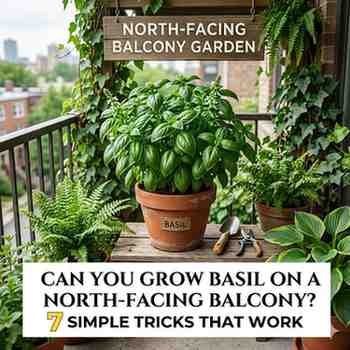
Growing fresh herbs on a balcony is one of the easiest ways to start container gardening. But if your balcony faces north, you might worry about limited sunlight. One common question many apartment gardeners ask is: Can basil grow on a north-facing balcony?
The good news is yes, basil can grow on a north-facing balcony, but it requires a few smart adjustments. Since basil loves sunlight, you’ll need to maximize the light your balcony receives and create the right growing conditions.
In this guide, you’ll learn 7 simple tricks that help basil thrive even with limited sun, plus common mistakes to avoid.
Does Basil Need Full Sun?
Basil is a sun-loving herb that typically needs 6–8 hours of sunlight per day for the best growth. When grown in ideal sunlight, basil plants become:
- Bushy and full
- Highly aromatic
- Fast-growing
- Packed with flavorful leaves
A north-facing balcony usually receives indirect light, which means basil may grow slower. However, with the right strategies, you can still grow healthy basil plants.
7 Simple Tricks to Grow Basil on a North-Facing Balcony
1. Place Basil in the Brightest Spot
Not all areas of a north-facing balcony receive the same amount of light.
To maximize sunlight:
- Place basil near the balcony edge or railing
- Avoid shaded corners
- Position plants where they receive morning or reflected light
Even 3–4 hours of indirect light can support basil growth if conditions are good.
2. Use Reflective Surfaces to Increase Light
A clever trick balcony gardeners use is reflecting sunlight toward plants.
You can do this by placing:
- White walls
- Reflective sheets
- Aluminum foil boards
- Light-colored tiles
These surfaces bounce sunlight toward basil leaves and increase available light naturally.
3. Choose Compact Basil Varieties
Some basil varieties grow better in low-light balcony conditions.
Best basil types for small balconies include:
- Genovese Basil
- Greek Basil
- Bush Basil
- Spicy Globe Basil
These varieties stay compact and adapt well to container gardening.
4. Use Small Pots That Warm Up Faster
In shady balconies, soil often stays cool. Basil prefers warm soil temperatures.
Use containers like:
- 6–8 inch pots
- Terracotta planters
- Dark-colored containers
Smaller pots warm up faster and help basil roots stay active.
5. Use High-Quality Potting Mix
Good soil makes a huge difference when sunlight is limited.
Use a well-draining potting mix such as:
- 40% garden soil
- 30% compost
- 20% coco peat
- 10% perlite or sand
This mix keeps roots healthy and prevents waterlogging.
6. Avoid Overwatering
North-facing balconies dry out slower because they get less direct sunlight.
Overwatering can cause problems like:
- Root rot
- Yellow leaves
- Slow growth
Only water basil when the top inch of soil feels dry.
7. Use Grow Lights (Optional but Effective)
If your balcony receives very little sunlight, you can use a small LED grow light.
Grow lights:
- Provide the light basil needs
- Speed up growth
- Improve leaf production
Even 4–6 hours of artificial light can dramatically improve basil health.
Signs Your Balcony Basil Needs More Light
If basil isn’t getting enough sunlight, you may notice:
- Tall and leggy stems
- Small leaves
- Slow growth
- Weak aroma
If this happens, move the plant to a brighter position on the balcony or add reflective surfaces.
Best Containers for Growing Basil on Balconies
Container size matters when growing herbs in small spaces.
Good options include:
- Terracotta pots
- Fabric grow bags
- Window railing planters
- Self-watering containers
Make sure containers have good drainage holes to prevent root problems.
Common Mistakes When Growing Basil on a Balcony
Many beginners struggle with balcony basil because of simple mistakes.
Avoid these:
❌ Planting basil in deep shade
❌ Using heavy garden soil
❌ Watering every day
❌ Not pruning basil regularly
❌ Using oversized pots
Regular pruning and harvesting helps basil grow bushier even with moderate sunlight.
Bonus Tip: Prune Basil Often
Pruning encourages bushier growth and more leaves.
How to prune basil:
- Wait until the plant has 6–8 leaves
- Cut the top stems just above a leaf node
- Harvest regularly
This prevents basil from becoming tall and leggy.
How much sunlight does basil need on a balcony?
Basil grows best with 6–8 hours of sunlight, but it can still grow with 3–4 hours of indirect light on a north-facing balcony.
Can basil grow in shade?
Basil can tolerate partial shade, but growth may be slower and leaves slightly smaller.
What is the best pot size for balcony basil?
A 6–8 inch pot works well for a single basil plant and helps maintain healthy root growth.
Why is my basil plant leggy on the balcony?
Leggy basil usually means insufficient sunlight. Moving the plant to a brighter spot can fix this.
Can I grow basil indoors instead of a balcony?
Yes, basil grows well indoors if placed near a bright window or under grow lights.
Final Thoughts
So, can you grow basil on a north-facing balcony? Absolutely.
While basil prefers full sun, it can still grow well with indirect light if you use the right techniques. By placing plants in the brightest spot, improving light reflection, choosing compact varieties, and avoiding overwatering, you can successfully grow fresh basil even in shaded balcony spaces.
With a little care and the 7 simple tricks in this guide, your balcony can produce healthy basil plants perfect for cooking, salads, and herbal teas.

Umair Abdullah is a dedicated balcony gardening writer who helps urban growers cultivate vegetables, herbs, and plants in small spaces. He focuses on practical, beginner-friendly methods and shares tested tips to make balcony gardening simple, productive, and enjoyable.