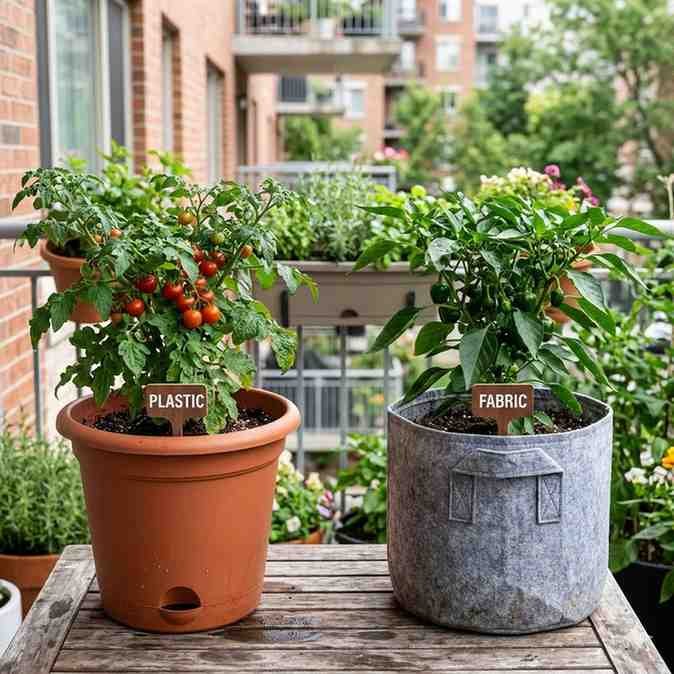
Growing vegetables on a balcony is one of the easiest ways to enjoy fresh, organic produce in small spaces. However, choosing the right container can make a big difference in plant health and harvest size. Two of the most common options for balcony gardeners are plastic pots and fabric pots (grow bags).
Both containers have advantages and disadvantages, and the best choice depends on factors like drainage, root health, durability, and climate.
In this guide, we’ll compare plastic vs fabric pots for balcony vegetables to help you choose the best container for your garden.
Why Choosing the Right Pot Matters for Balcony Gardening
Unlike ground gardens, balcony plants rely completely on the container for:
- Root space
- Drainage
- Moisture retention
- Temperature control
- Nutrient availability
If the pot restricts roots or holds too much water, plants may suffer from slow growth, root rot, or poor harvests.
That’s why selecting the right container is one of the most important decisions for balcony gardeners.
Plastic Pots for Balcony Vegetables
Plastic pots are the most commonly used containers in balcony gardens because they are cheap, lightweight, and widely available.
Advantages of Plastic Pots
1. Affordable and Easily Available
Plastic pots are one of the cheapest gardening containers. They are sold in many sizes and shapes and are available in almost every garden store.
This makes them ideal for beginners starting a balcony garden on a budget.
2. Lightweight and Easy to Move
Balcony gardens often need frequent rearranging for sunlight, and plastic pots are easy to lift and move compared to heavy containers like ceramic or clay.
3. Retains Moisture Longer
Plastic containers do not absorb water, which helps soil retain moisture longer.
This is especially useful in hot climates where soil dries quickly.
4. Durable in Rainy Conditions
Plastic does not rot or absorb water, making it suitable for balconies exposed to rain.
Disadvantages of Plastic Pots
1. Poor Aeration
Plastic pots have limited airflow to plant roots. Without proper drainage holes, soil can become compacted and reduce oxygen supply to roots.
2. Risk of Overwatering
Since plastic pots retain moisture, overwatering can easily lead to root rot or fungal diseases.
3. Heat Build-Up
Plastic containers can heat up quickly under strong sunlight, which may damage plant roots during hot summer days.
Fabric Pots (Grow Bags) for Balcony Vegetables
Fabric pots, also called grow bags, are made from breathable fabric materials designed to improve root health and drainage.
They are becoming increasingly popular among urban gardeners.
Advantages of Fabric Pots
1. Excellent Drainage
Fabric pots allow excess water to drain easily, preventing waterlogged soil.
This helps reduce the risk of root diseases.
2. Better Root Aeration
The breathable fabric allows air to reach plant roots, improving oxygen flow and encouraging stronger root growth.
3. Air Pruning of Roots
One unique benefit of fabric pots is air pruning.
When roots reach the edge of the bag, air exposure stops their growth and encourages the plant to produce more side roots. This creates a healthier root system.
4. Prevents Overheating
Fabric pots release excess heat faster than plastic containers, helping keep roots cooler during hot weather.
5. Lightweight and Foldable
Grow bags are extremely light and can be folded and stored easily when not in use.
Disadvantages of Fabric Pots
1. Soil Dries Faster
Because of high airflow, fabric pots lose moisture quickly. Plants may require more frequent watering.
2. Less Durable
Fabric pots may wear out after 2–4 growing seasons, especially if exposed to harsh sunlight or heavy rain.
3. Not Always Stable on Windy Balconies
Because they are lightweight, grow bags may tip over in strong balcony winds.
Plastic vs Fabric Pots: Key Comparison
| Feature | Plastic Pots | Fabric Pots |
|---|---|---|
| Drainage | Moderate | Excellent |
| Root Aeration | Low | High |
| Water Retention | High | Moderate |
| Heat Control | Poor | Good |
| Durability | Long lasting | Medium |
| Cost | Cheap | Slightly higher |
| Portability | Easy to move | Very lightweight |
Best Vegetables for Plastic Pots
Plastic containers work well for vegetables that prefer consistent moisture, such as:
- Lettuce
- Spinach
- Kale
- Herbs (mint, parsley, cilantro)
- Green onions
These plants benefit from the moisture retention plastic pots provide.
Best Vegetables for Fabric Pots
Fabric pots are excellent for vegetables that require good drainage and strong root growth, including:
- Tomatoes
- Cucumbers
- Peppers
- Potatoes
- Eggplant
- Zucchini
These crops grow better when roots receive more oxygen.
Which Pot Is Better for Balcony Vegetables?
The answer depends on your gardening conditions.
Choose plastic pots if:
- You want low-maintenance watering
- Your balcony gets strong wind
- You want long-lasting containers
Choose fabric pots if:
- You want healthier roots
- You struggle with overwatering
- Your balcony gets strong sunlight
For many balcony gardeners, using both types together works best.
For example:
- Leafy greens in plastic pots
- Fruiting vegetables in fabric grow bags
This combination provides the advantages of both container types.
Tips for Growing Vegetables Successfully in Balcony Pots
Regardless of the container you choose, follow these tips for better harvests:
Use High-Quality Potting Mix
Avoid garden soil because it becomes compacted in containers.
Ensure Proper Drainage
Always choose containers with drainage holes to prevent waterlogging.
Provide Enough Sunlight
Most vegetables need 6–8 hours of sunlight daily.
Fertilize Regularly
Container plants need more nutrients, so apply organic fertilizer every 2–3 weeks.
Choose the Right Pot Size
Most vegetables grow best in containers that hold 10–20 liters of soil.
Are fabric pots better than plastic pots for vegetables?
Fabric pots are often better for vegetables because they provide better drainage, airflow, and healthier root systems.
Do fabric pots dry out too quickly?
Yes, fabric pots lose moisture faster than plastic pots, so they may require more frequent watering.
How long do fabric grow bags last?
Most fabric pots last 2 to 4 growing seasons, depending on quality and weather exposure.
Can I grow tomatoes in plastic pots?
Yes, tomatoes grow well in plastic containers as long as the pot is large enough and has good drainage holes.
What size pot is best for balcony vegetables?
Most vegetables grow best in containers 10–20 liters in size, which provide enough space for root development.
Final Verdict
Both plastic pots and fabric pots can grow healthy balcony vegetables, but they serve different purposes.
- Plastic pots are affordable, durable, and retain moisture longer.
- Fabric pots provide better drainage, healthier roots, and cooler soil.
For most balcony gardeners, fabric pots are slightly better for vegetable production, especially for tomatoes, cucumbers, and peppers. However, plastic pots remain a reliable choice for leafy greens and herbs.
The best approach is to combine both containers to create a productive and efficient balcony vegetable garden.

Umair Abdullah is a dedicated balcony gardening writer who helps urban growers cultivate vegetables, herbs, and plants in small spaces. He focuses on practical, beginner-friendly methods and shares tested tips to make balcony gardening simple, productive, and enjoyable.