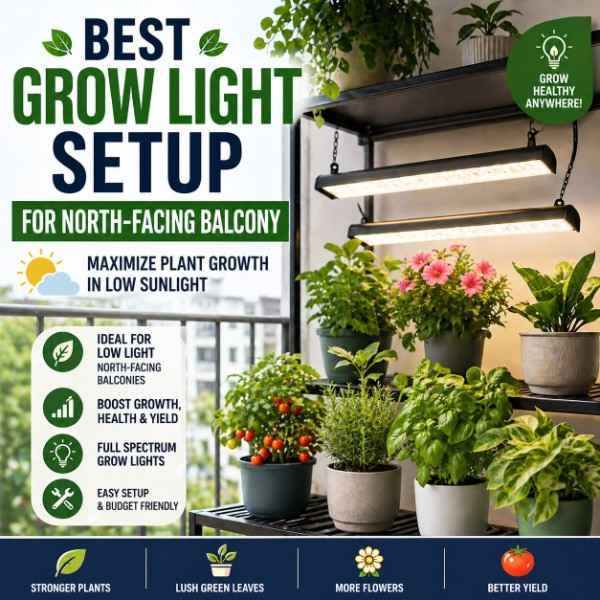
A north-facing balcony is one of the most challenging spaces for gardening because it receives minimal or no direct sunlight throughout the day. However, this doesn’t mean you cannot grow healthy, lush, and productive plants. With the right grow light setup, you can completely transform a dim balcony into a thriving green space.
In this guide, you’ll learn how to design the best grow light setup for a north-facing balcony, choose the right lights, position them correctly, and maximize plant growth even in low-light conditions.
Why North-Facing Balconies Need Grow Lights
North-facing balconies typically receive only indirect, diffused light all day. This light is often too weak for most herbs, vegetables, and flowering plants.
Studies and gardening guides show that such spaces fall into low-light conditions, where plants may grow slowly, become leggy, or stop producing properly without supplemental lighting (Garden Botany).
That’s where grow lights become essential.
Grow lights:
- Mimic natural sunlight
- Provide consistent light intensity
- Support photosynthesis even in shaded environments
- Extend growing hours beyond natural daylight
Understanding the Right Light for Plant Growth
To build an effective setup, you need to understand what plants actually need.
Plants don’t just need “brightness”—they need:
- Blue light → Leaf and stem growth
- Red light → Flowering and fruiting
- Full-spectrum light → Balanced growth
For north-facing balconies, full-spectrum LED grow lights are the best choice because they replicate natural sunlight and are energy efficient.
Best Grow Light Setup for North-Facing Balcony
Here is a proven setup that works for most balcony gardeners:
1. Use Full-Spectrum LED Grow Lights (Most Important Step)
LED grow lights are the best option because they:
- Consume less electricity
- Produce less heat
- Last longer (up to 50,000 hours)
- Provide balanced light spectrum
👉 Choose lights labeled:
- “Full Spectrum”
- “4000K–6500K (daylight range)”
- “Grow light for vegetables or indoor plants”
2. Install Vertical Hanging or Shelf System
Since balconies are narrow, vertical setup works best:
- Wall-mounted shelves
- Hanging grow light bars
- Tier plant stands
This allows you to stack plants and maximize space while ensuring each plant receives enough light.
3. Proper Light Distance Placement
Light placement is critical:
- Leafy greens: 6–12 inches from light
- Herbs: 8–14 inches
- Flowering plants: 10–18 inches
Too far = weak growth
Too close = leaf burn or stress
A simple adjustable hanging system is highly recommended.
4. Use Timer Automation (Game Changer)
Plants need consistent light cycles.
Set your grow lights on:
- 12–16 hours ON
- 8–12 hours OFF
This mimics natural daylight and ensures healthy growth cycles.
Timers also save electricity and reduce maintenance.
5. Reflective Surfaces for Maximum Efficiency
You can boost light efficiency by 20–30% using reflection techniques:
- White walls or paint
- Aluminum foil boards
- Reflective grow tent sheets
- Light-colored balcony tiles
This helps bounce light back to plants, improving absorption.
6. Best Plant Placement Strategy
Not all plants should be placed equally.
Top shelf (highest light exposure):
- Tomatoes (dwarf varieties)
- Chili plants
- Strawberries
Middle shelves:
- Basil
- Mint
- Coriander
- Parsley
Bottom shelves:
- Lettuce
- Spinach
- Ferns
- Snake plant
This layering mimics natural sunlight gradients.
Best Plants for Grow Lights on North-Facing Balcony
These plants perform extremely well under artificial lighting:
Herbs:
- Basil
- Mint
- Coriander
- Thyme
Vegetables:
- Lettuce
- Spinach
- Kale
- Microgreens
Decorative plants:
- Pothos
- Snake plant
- Peace lily
- Philodendron
These are naturally adapted to low or indirect light conditions (Growitindoor.com).
Common Mistakes to Avoid
Many beginners fail because of these errors:
❌ Using weak decorative LED bulbs instead of grow lights
❌ Placing lights too far from plants
❌ No timer setup (irregular light cycles)
❌ Overwatering due to slow growth misunderstanding
❌ Ignoring reflective surfaces
Avoiding these mistakes can instantly improve plant health.
Pro-Level Grow Light Setup (Advanced Tip)
If you want professional-level results:
- Use 2–3 LED panels instead of one
- Mix warm + cool white spectrum
- Add a clip-on directional light for herbs
- Combine with organic liquid fertilizer every 10–15 days
This creates a mini indoor greenhouse effect on your balcony.
Final Thoughts
A north-facing balcony may seem like a limitation, but with the right grow light setup, it can become a highly productive green space. The key is to use:
- Full-spectrum LED grow lights
- Proper spacing and layering
- Timers for consistency
- Reflective surfaces for efficiency
Once optimized, even low-light balconies can produce healthy herbs, vegetables, and decorative plants year-round.

Umair Abdullah is a dedicated balcony gardening writer who helps urban growers cultivate vegetables, herbs, and plants in small spaces. He focuses on practical, beginner-friendly methods and shares tested tips to make balcony gardening simple, productive, and enjoyable.
thanks