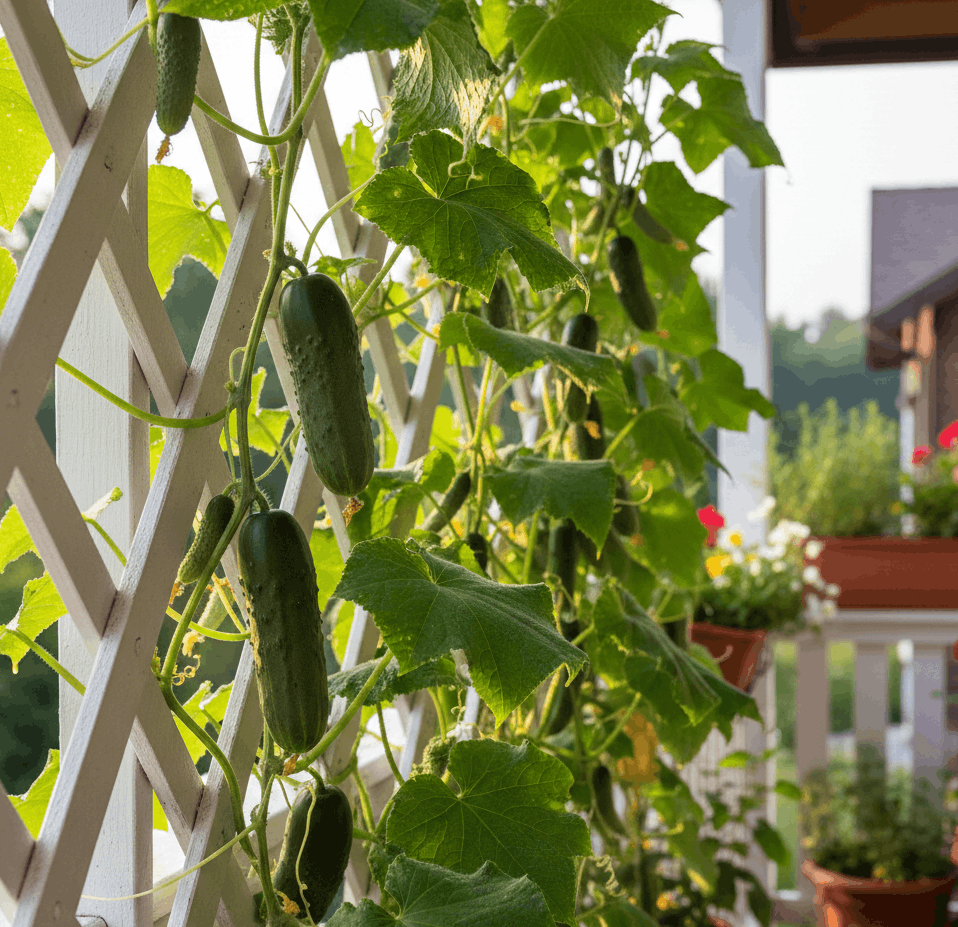
Growing cucumbers vertically on a balcony is one of the smartest ways to maximize a small gardening space. Instead of letting vines spread across the floor, training them upward on a trellis keeps your balcony organized and clutter-free.
Vertical growing saves valuable floor space, making it easier to grow more plants even in tight apartment settings. It also improves air circulation and sunlight exposure, which can lead to healthier plants and higher yields. If you want bigger harvests without sacrificing space, growing cucumbers vertically on a balcony is a simple and highly effective solution.
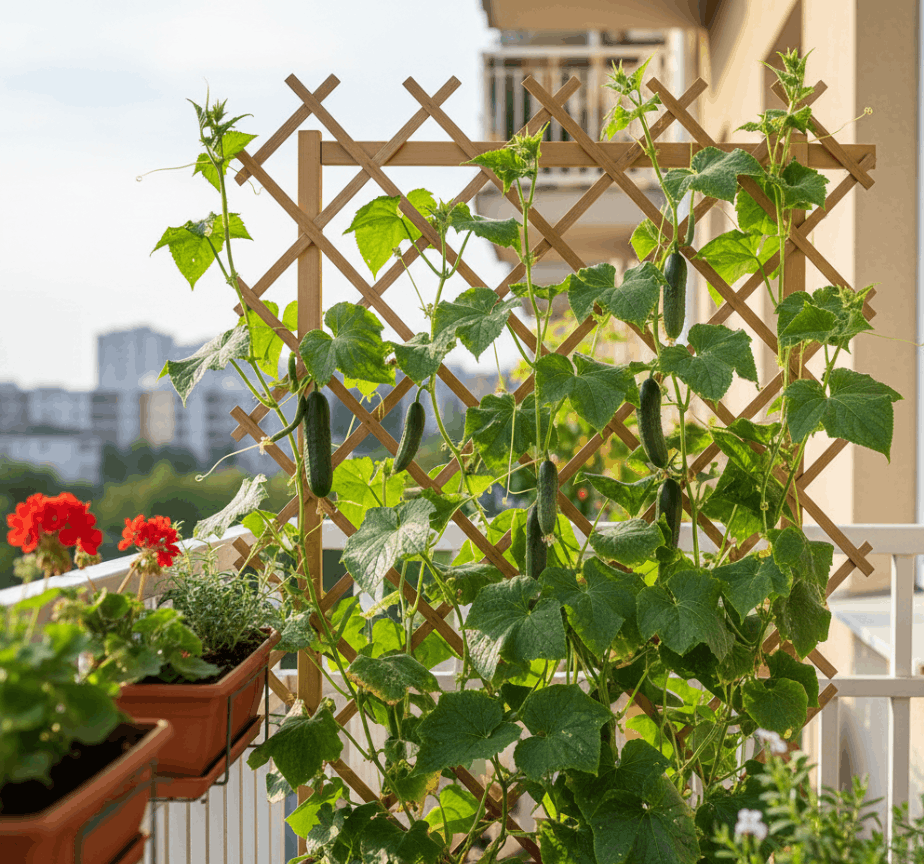
Why Grow Cucumbers Vertically on a Balcony?
Growing cucumbers vertically on a balcony offers several practical benefits, especially for small-space gardeners.
1. Saves Space
Balconies have limited floor area, and cucumber vines can spread quickly if left to grow on the ground. Training them upward on a trellis keeps the growing area compact and frees up space for other vegetables or herbs.
2. Helps Prevent Disease
When vines and leaves sit on damp soil, they are more likely to develop fungal problems and rot. Growing vertically keeps foliage off the soil surface, reducing the risk of common diseases and keeping plants healthier.
3. Improves Airflow
Vertical growth allows better air circulation around the leaves. Good airflow helps plants dry faster after watering or rain, which lowers the chances of mildew and pest issues.
4. Makes Harvesting Easier
When cucumbers hang down from a trellis, they’re easier to spot and pick. You won’t have to search through tangled vines, and fruits tend to grow straighter and cleaner when supported vertically.
Best Cucumber Varieties for Balcony Growing
Choosing the right cucumber variety can make vertical growing on a balcony easier and more productive. Here are some excellent options that thrive in containers and respond well to support structures like trellises:
| Variety Name | Type | Why It’s Great for Balconies |
|---|---|---|
| Bush Champion | Bush/Compact | Short vines, perfect for small spaces |
| Salad Bush | Bush | High yield, compact growth |
| Spacemaster 80 | Compact/Vine | Great in containers, manageable vines |
| English Telegraph | Climbing | Slim fruits ideal for vertical growth |
| Marketmore 76 | Climbing | Disease-resistant, reliable producer |
🌿 Recommended Balcony Varieties
1. Bush Champion
Compact vines make this one ideal for small pots and balcony gardens.
2. Salad Bush
Produces lots of cucumbers in a limited space — perfect for beginners.
3. Spacemaster 80
Designed for containers with shorter vine length, but still productive.
4. English Telegraph
A climbing variety that adapts well to trellises and vertical supports.
5. Marketmore 76
Popular for its resistance to common cucumber diseases — great choice if your balcony gets varied weather.
💡 Tip: For very small balconies, start with bush/compact varieties. If you have a sturdy railing and trellis, climbers will give you more fruit per plant.
What You Need to Grow Cucumbers Vertically on a Balcony
Before planting, gather the right supplies to ensure strong growth and a good harvest. Vertical cucumber plants need proper support, nutrients, and space for healthy roots.
- Container (12–16 inches deep and wide)
Choose a pot that is at least 12 inches deep, but 16 inches is even better for strong root development. Make sure it has good drainage holes to prevent waterlogging. - High-Quality Potting Soil Mix
Use a well-draining potting mix designed for containers — not garden soil. A mix enriched with compost or organic matter helps retain moisture while still allowing proper drainage. - Trellis or Vertical Support (5–6 feet tall)
Install a sturdy trellis, bamboo stakes, string support, or a railing trellis. Cucumbers climb naturally and need strong vertical support as they grow. - Balanced Fertilizer
Use a balanced liquid fertilizer (such as 10-10-10) every 2–3 weeks, or a slow-release fertilizer mixed into the soil at planting time. Cucumbers are heavy feeders and need consistent nutrients for high yields.
💡 Tip: Set up the trellis at planting time to avoid disturbing roots later.
Step-by-Step Guide to Growing Cucumbers Vertically on a Balcony
Follow these simple steps to set up your vertical cucumber garden successfully:
1. Choose the Right Pot
Select a container that is at least 12–16 inches deep and wide. Make sure it has proper drainage holes at the bottom to prevent root rot. Larger pots retain moisture better and support healthier growth.
2. Add Quality Potting Soil
Fill the container with a rich, well-draining potting mix. Avoid using garden soil, as it can become compacted in pots. Mix in compost or a slow-release fertilizer to give your cucumbers a strong start.
3. Plant the Seeds or Seedlings
Sow 2–3 cucumber seeds about 1 inch deep in the center of the pot. If using seedlings, plant them at the same depth they were growing in their nursery container. Once seedlings sprout, thin to the strongest plant.
4. Install the Trellis Early
Place a sturdy 5–6 foot trellis, stakes, or string support in the pot immediately after planting. Installing support early prevents root disturbance later and ensures vines grow upward from the start.
5. Train the Vines Upward
As the cucumber plant grows, gently guide the vines toward the trellis. You can loosely tie them with soft garden ties if needed. Cucumbers naturally produce tendrils that will latch onto supports and climb on their own.
With proper watering and sunlight, your balcony cucumber plant will begin climbing quickly and producing fruit within a few weeks.
Best Trellis Ideas for Balcony Cucumbers
Choosing the right support system is essential when growing cucumbers vertically on a balcony. A sturdy trellis keeps vines organized, improves airflow, and helps produce straighter, cleaner fruit. Here are some of the best trellis options for small balcony spaces:
1. String Trellis (Budget-Friendly & Space-Saving)
A string trellis is one of the simplest vertical growing methods. Attach strong garden twine from the top of your balcony wall, ceiling hook, or railing down to the pot. As the cucumber vines grow, gently wrap them around the string. This method works well for very small balconies and costs almost nothing.
2. Ladder Trellis (Stable & Beginner-Friendly)
A wooden or metal ladder-style trellis placed directly inside the pot provides sturdy support. The horizontal rungs make it easy for tendrils to grab on naturally. This option is ideal if your balcony gets wind, as it offers better stability than thin string systems.
3. Railing Trellis (Perfect for Tight Spaces)
If your balcony has railings, you can attach netting or mesh directly to them. Cucumber vines can climb upward along the railing, maximizing vertical space without taking up extra floor area. This method is excellent for narrow balconies.
💡 Tip: Choose a trellis at least 5–6 feet tall. Cucumbers grow quickly, and giving them enough vertical height increases yield and keeps your balcony neat.
Common Problems When Growing Cucumbers Vertically on a Balcony (And How to Fix Them)
Even with the best setup, balcony cucumbers can face a few common issues. The good news? Most problems are easy to fix if caught early.
1. Yellow Leaves on Balcony Cucumbers
Possible causes:
- Overwatering or poor drainage
- Nutrient deficiency (especially nitrogen)
- Lack of sunlight
How to fix it:
- Check that your pot drains properly and avoid soggy soil.
- Feed the plant with a balanced liquid fertilizer every 2–3 weeks.
- Make sure your cucumbers get at least 6–8 hours of sunlight daily.
If only the lower leaves are turning yellow, it may be normal aging. But widespread yellowing usually signals a care issue.
2. Flowers but No Fruit (No Cucumbers Forming)
This is a very common balcony problem.
Possible causes:
- Lack of pollination
- Too much nitrogen fertilizer
- Extreme heat
How to fix it:
- Hand-pollinate by transferring pollen from male flowers to female flowers using a small brush.
- Reduce high-nitrogen fertilizers and switch to a balanced or slightly higher phosphorus feed.
- Water consistently during hot weather to reduce plant stress.
Parthenocarpic (self-pollinating) varieties can reduce this issue on balconies with fewer pollinators.
3. Pests on Balcony Cucumbers
Common pests include:
- Aphids
- Spider mites
- Whiteflies
How to fix it:
- Spray leaves with water to remove small infestations.
- Use neem oil or insecticidal soap weekly if pests persist.
- Improve airflow by pruning overcrowded leaves.
Check the underside of leaves regularly — early detection makes pest control much easier.
💡 Tip: Healthy, well-watered plants grown vertically with good airflow are far less likely to develop serious problems. Regular monitoring is the key to a successful balcony cucumber harvest.
Harvest Tips for Balcony Cucumbers
Harvest cucumbers regularly to encourage the plant to keep producing. Most varieties are ready to pick 50–70 days after planting, depending on the type. Check your vines daily once fruit starts forming, as cucumbers can grow quickly in warm weather.
Pick cucumbers when they are firm, green, and the recommended size for their variety. Overripe fruits can become bitter and slow down new production. Use clean scissors or garden pruners to cut the fruit off the vine instead of pulling, which can damage the plant.
Frequent harvesting leads to a longer and more productive growing season on your balcony.
Can cucumbers grow in pots on a balcony?
How tall should a cucumber trellis be for balcony growing?
Do cucumbers need full sun on a balcony?
How often should I water balcony cucumbers?
Why are my balcony cucumbers flowering but not producing fruit?
Conclusion
Growing cucumbers vertically on a balcony may seem challenging at first, but it’s actually one of the easiest and most rewarding vegetables to grow in small spaces. With the right container, a sturdy trellis, and consistent care, you can enjoy fresh, homegrown cucumbers even in a compact apartment setting.
Start simple, follow the basic steps, and don’t worry about small mistakes — plants are more forgiving than you think. Once you see your cucumber vines climbing and producing fruit, you’ll gain the confidence to grow even more vegetables on your balcony. Small space doesn’t mean small harvests — it just means growing smarter.

Umair Abdullah is a dedicated balcony gardening writer who helps urban growers cultivate vegetables, herbs, and plants in small spaces. He focuses on practical, beginner-friendly methods and shares tested tips to make balcony gardening simple, productive, and enjoyable.
Interesting btw