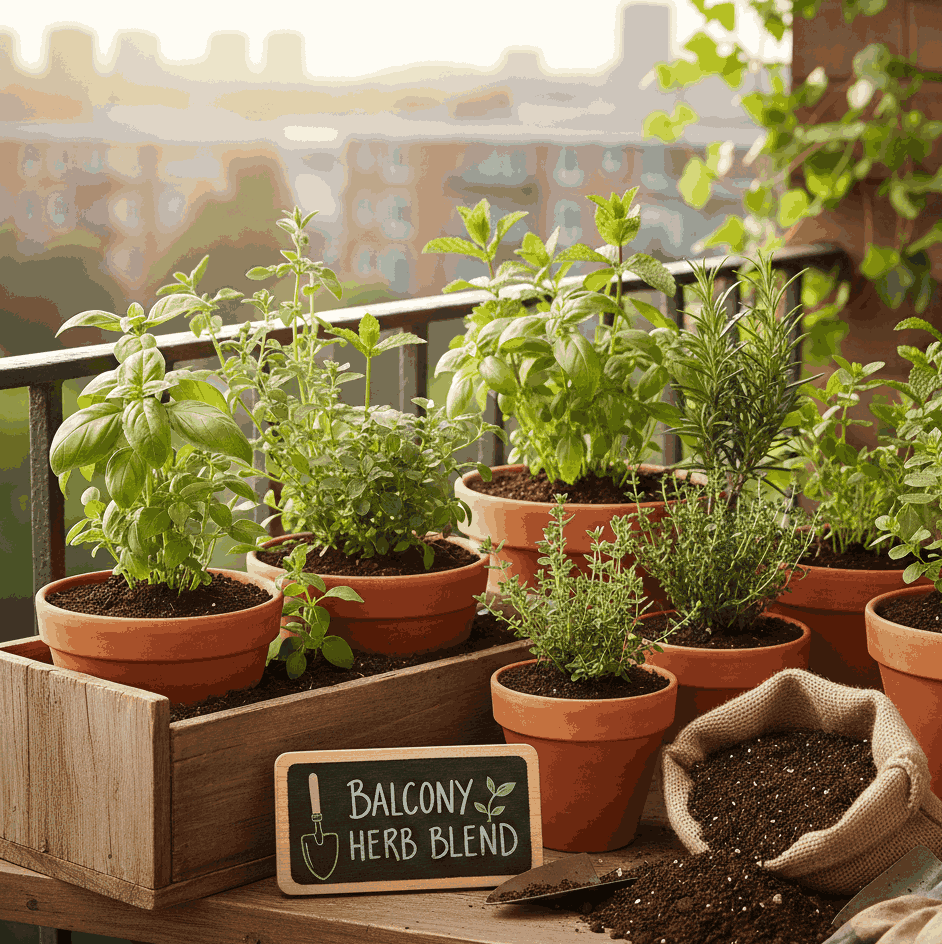
Choosing the best soil mix for growing herbs on a balcony is one of the most important steps for a healthy and productive container garden. Unlike garden beds, balcony herbs grow in pots where nutrients and drainage are completely controlled by the soil you use. A poor mix can lead to root rot, weak growth, or flavorless herbs. The good news? With the right balance of drainage, nutrients, and moisture retention, your basil, mint, parsley, and other herbs can thrive in small balcony spaces all season long.
Why Regular Garden Soil Doesn’t Work in Pots
Many beginners make the mistake of using garden soil in containers. This often causes problems because:
- It compacts easily in pots
- It drains poorly
- It can carry pests or diseases
- It becomes heavy and waterlogged
Herbs growing on a balcony need a light, airy, well-draining soil mix designed specifically for containers.
What Makes the Best Soil Mix for Balcony Herbs?
A great herb soil mix must have three key qualities:
1. Excellent Drainage
Herbs dislike soggy roots. Too much moisture can cause root rot, especially in containers without perfect drainage.
2. Good Moisture Retention
While herbs hate waterlogged soil, they also dry out quickly in balcony conditions. The soil must retain enough moisture between watering sessions.
3. Balanced Nutrients
Herbs need steady but moderate nutrition. Overly rich soil can reduce flavor intensity, while nutrient-poor soil leads to weak growth.
The Perfect DIY Soil Mix Recipe for Balcony Herbs
If you want a reliable and beginner-friendly blend, use this simple formula:
Basic Balcony Herb Soil Mix:
- 40% high-quality potting soil
- 30% compost (well-aged, organic)
- 20% coco coir or peat moss
- 10% perlite or coarse sand
Why This Works:
- Potting soil provides structure and nutrients
- Compost adds organic matter and supports healthy roots
- Coco coir helps retain moisture
- Perlite improves drainage and airflow
This mix keeps roots healthy while preventing water buildup.
Best Store-Bought Soil Options for Balcony Herbs
If you prefer not to mix your own soil, look for:
- Container potting mix
- Organic herb soil blends
- Vegetable and herb potting soil
Avoid heavy garden soil or mixes labeled for raised beds only.
Soil Adjustments for Different Herbs
Not all herbs have identical soil preferences. Here’s how to tweak your mix:
Mediterranean Herbs (Love Drier Soil)
Examples: rosemary, thyme, oregano
- Add extra perlite or sand
- Reduce compost slightly
- Improve drainage
Soft Leafy Herbs (Prefer Slightly More Moisture)
Examples: basil, cilantro, parsley
- Keep compost at full ratio
- Maintain good moisture retention
- Avoid overly sandy mixes
This small adjustment helps each herb thrive.
How to Grow Cucumbers Vertically on a Balcony (Step-by-Step Guide)
How to Prepare the Soil in Your Balcony Pots
Follow these steps:
- Ensure your container has drainage holes
- Add a thin layer of small stones at the bottom (optional)
- Fill the pot with your prepared soil mix
- Lightly press the soil without compacting it
- Water thoroughly before planting
Proper preparation reduces transplant shock and supports early growth.
Common Soil Problems When Growing Herbs on a Balcony
Soil Dries Out Too Fast
- Add more coco coir or compost
- Move pots out of harsh afternoon sun
Soil Stays Wet Too Long
- Increase perlite content
- Check drainage holes
- Avoid overwatering
Weak or Slow Growth
- Feed lightly with balanced liquid fertilizer every 2–3 weeks
- Refresh top layer of soil mid-season
Balcony environments can change quickly, so small adjustments make a big difference.
How Often Should You Replace Herb Potting Soil?
For best results:
- Refresh soil every growing season
- Replace completely if plants had disease issues
- Top-dress with compost mid-season
Container soil loses nutrients faster than garden soil, so seasonal renewal keeps herbs productive.
Frequently Asked Questions
What is the best soil mix for balcony herb gardens?
A well-draining mix made of potting soil, compost, coco coir, and perlite works best. It balances moisture retention and airflow, which is ideal for herbs grown in containers.
Can I use regular potting soil for herbs?
Yes, but improve it by adding compost and perlite for better drainage and nutrients.
Do herbs need rich soil?
Herbs prefer moderately fertile soil. Overly rich mixes can reduce flavor intensity, especially in Mediterranean herbs.
How do I improve drainage in balcony pots?
Add perlite, coarse sand, or ensure the container has multiple drainage holes.
Should I fertilize herbs grown in containers?
Yes, but lightly. Use diluted liquid fertilizer every few weeks during active growth.
Conclusion
The best soil mix for growing herbs on a balcony is light, well-draining, and nutrient-balanced. Whether you choose a DIY blend or a quality store-bought mix, the goal is to provide healthy roots with proper airflow and consistent moisture. With the right soil foundation, even a small balcony can produce fragrant basil, fresh mint, and flavorful parsley all season long. Start with a good mix, adjust based on your herbs, and enjoy a thriving container garden in any small space.

Umair Abdullah is a dedicated balcony gardening writer who helps urban growers cultivate vegetables, herbs, and plants in small spaces. He focuses on practical, beginner-friendly methods and shares tested tips to make balcony gardening simple, productive, and enjoyable.
helpful! thanks